
Ready by 8:45am Oct 1, 2026
150 Biology Research Topics for Students (2026)
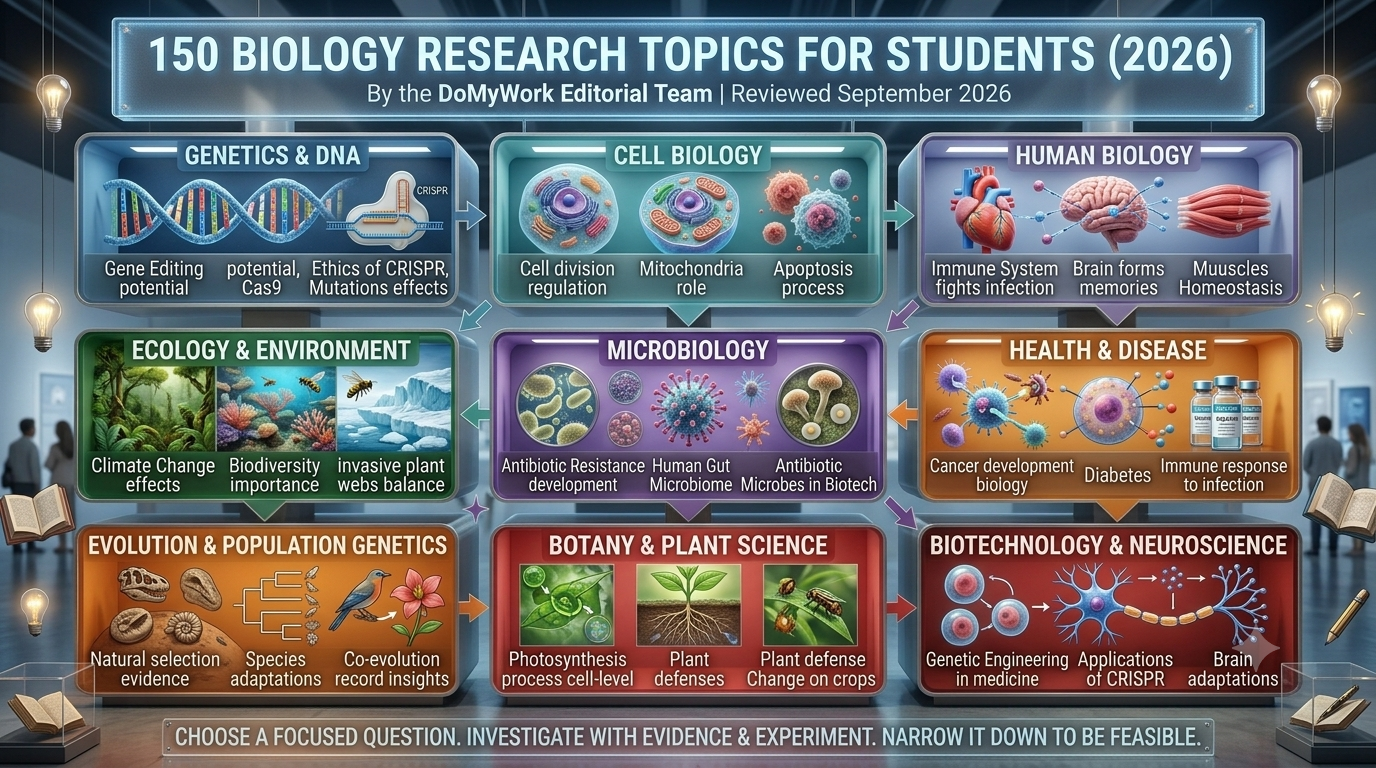
A strong biology research topic asks a clear question you can investigate with evidence or experiment. Good areas include genetics, cell biology, ecology, human biology, microbiology, evolution and biotechnology. The topic should be specific enough to research in depth. This guide gives 150 topics grouped by area, then shows how to choose one.
Biology is a vast field, from molecules to ecosystems, which makes it rich in research topics but easy to pick something too broad. The best topics are specific questions you can investigate with evidence or experiment. This guide gives 150 biology research topics grouped by area, then shows how to choose and shape one. Because a research project depends on good sources and a clear method, our science research topics and how to write a literature review guides help you take a topic further.
What makes a good biology research topic?
A good biology topic asks a clear, specific question you can investigate, whether through experiment, observation or existing data. It is narrow enough to research in depth, since a broad topic becomes shallow, and it is feasible with the resources and time you have. It should also connect to current biological knowledge, so there is a body of research to build on. The most common mistake is choosing something too broad, such as genetics, when a focused topic like how a specific gene affects a trait in a model organism gives you a researchable question. Narrow every promising idea to that level.
150 biology research topics by area
The topics below are grouped by area. Narrow any of them to a specific, researchable question.
Genetics and DNA
● How gene editing could treat inherited disease.
● The ethics of CRISPR gene editing.
● How mutations affect protein function.
● The role of epigenetics in gene expression.
● How genetic testing affects healthcare.
● The genetics of a chosen disease.
● How DNA replication is regulated.
● The role of genes in behaviour.
● How gene therapy works.
● The genetics of ageing.
● How inherited traits are passed on.
● How genome sequencing has changed medicine.
● The role of junk DNA.
● How genetic diversity affects populations.
Cell biology
● How cells regulate their division.
● The role of mitochondria in energy production.
● How cancer cells differ from normal cells.
● The process of apoptosis.
● How stem cells could treat disease.
● The structure and function of cell membranes.
● How cells communicate with each other.
● The role of enzymes in cellular reactions.
● How cells respond to stress.
● The process of photosynthesis at cell level.
● How the cell cycle is controlled.
● The role of proteins in the cell.
● How cells transport materials.
● How viruses hijack host cells.
Human biology and physiology
● How the immune system fights infection.
● The physiology of the human heart.
● How the brain forms memories.
● The effects of exercise on the body.
● How the digestive system absorbs nutrients.
● The role of hormones in the body.
● How the nervous system transmits signals.
● The physiology of sleep.
● How the body maintains homeostasis.
● The effects of stress on the body.
● How the respiratory system works.
● The role of the microbiome in health.
● How the body ages.
● The physiology of the human eye.
Ecology and the environment
● How climate change affects ecosystems.
● The importance of biodiversity.
● How invasive species disrupt ecosystems.
● The role of pollinators in ecosystems.
● How pollution affects aquatic life.
● The effects of deforestation on wildlife.
● How ecosystems recover after disturbance.
● The role of keystone species.
● How urbanisation affects biodiversity.
● The effects of ocean acidification.
● How food webs maintain balance.
● The role of decomposers in ecosystems.
● How habitat loss affects species.
● The effects of climate change on migration.
Microbiology
● How antibiotic resistance develops.
● The role of bacteria in the human gut.
● How viruses evolve.
● The benefits of probiotics.
● How microbes are used in biotechnology.
● The role of fungi in ecosystems.
● How pathogens cause disease.
● The use of bacteria in bioremediation.
● How the immune system responds to bacteria.
● The role of microbes in food production.
● How vaccines train the immune system.
● The threat of emerging infectious diseases.
● How biofilms form.
● The role of microbes in nutrient cycling.
Evolution and genetics of populations
● How natural selection drives evolution.
● The evidence for human evolution.
● How species adapt to their environment.
● The role of genetic drift in evolution.
● How new species form.
● The evolution of antibiotic resistance.
● How co-evolution shapes species.
● The evolution of a chosen trait.
● How fossils reveal evolutionary history.
● The role of mutation in evolution.
● How sexual selection works.
● The evolution of the human brain.
● How populations evolve over time.
● The evidence for common ancestry.
Botany and plant science
● How plants respond to light.
● The process of photosynthesis.
● How plants defend against pests.
● The role of plants in the carbon cycle.
● How drought affects plant growth.
● The importance of plant biodiversity.
● How plants communicate.
● The effects of climate change on crops.
● How genetic modification improves crops.
● The role of plants in medicine.
● How plants absorb nutrients.
● The process of plant reproduction.
● How invasive plants spread.
● The role of plants in ecosystems.
Health and disease
● The biology of a chosen disease.
● How cancer develops and spreads.
● The role of genetics in disease.
● How the body fights viral infection.
● The biology of diabetes.
● How lifestyle affects disease risk.
● The role of inflammation in disease.
● How vaccines prevent disease.
● The biology of allergies.
● How the body responds to infection.
● The role of the immune system in autoimmune disease.
● How neurodegenerative diseases progress.
● The biology of obesity.
● How infectious diseases spread.
Biotechnology and applied biology
● How genetic engineering is used in medicine.
● The applications of stem cell research.
● How biotechnology improves agriculture.
● The use of enzymes in industry.
● How synthetic biology works.
● The ethics of genetic modification.
● How biofuels are produced.
● The role of biotechnology in vaccines.
● How gene therapy could cure disease.
● The applications of CRISPR.
● How microbes are used to clean pollution.
● The future of personalised medicine.
● How biotechnology aids conservation.
● The use of DNA in forensics.
Neuroscience and behaviour
● How the brain processes information.
● The biology of memory.
● How neurons communicate.
● The effects of drugs on the brain.
● How the brain controls emotion.
● The biology of addiction.
● How sleep affects the brain.
● The role of neurotransmitters.
● How the brain adapts after injury.
● The biology of stress.
● How the brain develops.
● The neuroscience of learning.
● How the brain perceives pain.
● The biology of a chosen behaviour.
How to choose and shape a biology topic
Start from an area of biology that interests you, then narrow it to a specific, researchable question, since depth beats breadth. Check you can investigate it with the resources you have, whether that means an experiment, existing data, or a literature-based review, and confirm there is enough research to build on. Shape it into a clear question, so how genes affect a trait becomes a focused question you can answer, and decide whether your study is experimental or based on existing evidence, drawing on our qualitative vs quantitative research guide. A narrow, feasible question with good sources behind it is far easier to research well.
Tips for your biology research
Keep your topic focused, use credible scientific sources, and reference them properly. If your project is experimental, plan your method carefully; if it is literature-based, gather and evaluate the evidence thoroughly. Before you submit, run your finished work through our plagiarism check to confirm your referencing is complete. Whichever topic you choose above, keep it specific, make sure you can investigate it, and let clear evidence and analysis carry the research.
Popular posts
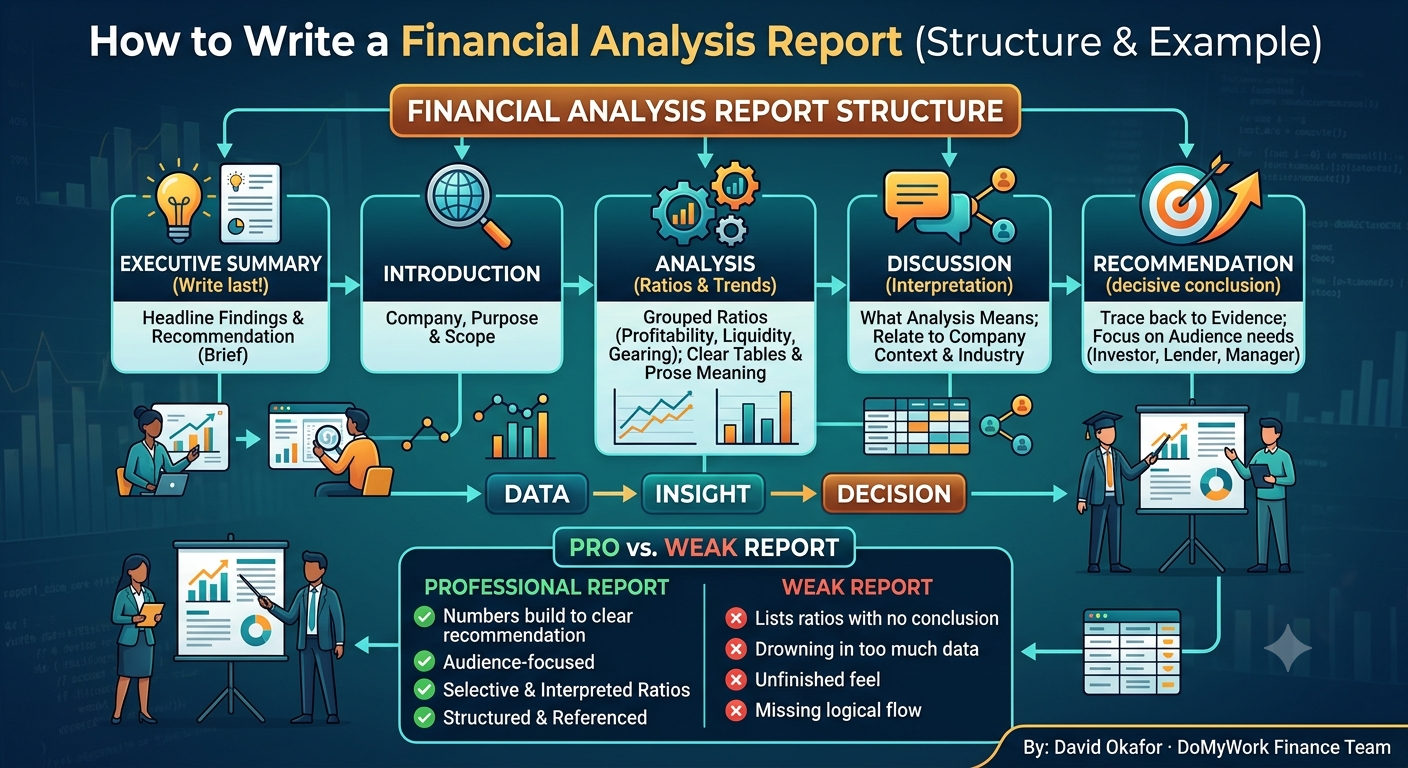
How to Write a Financial Analysis Report (Structure and Example)
July 13, 2026
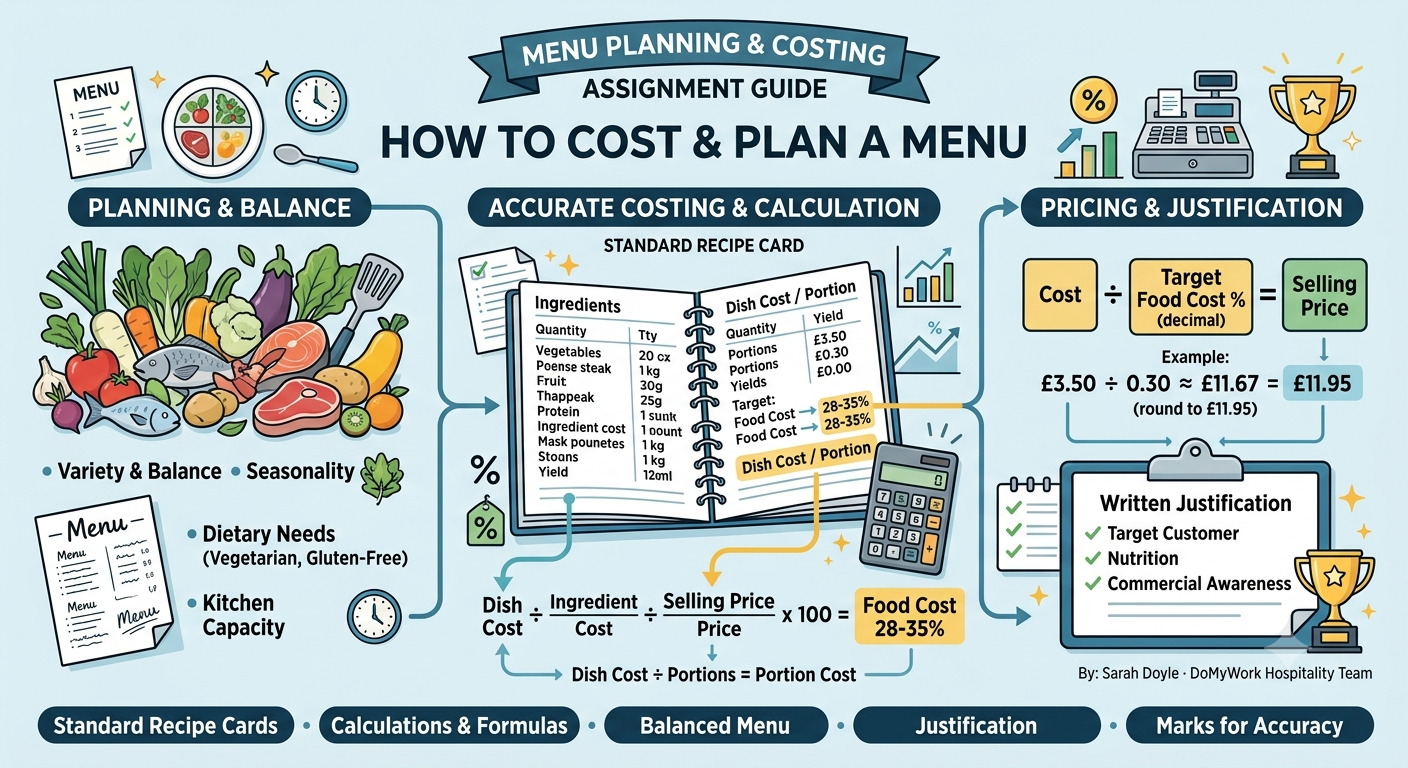
How to Cost and Plan a Menu for a Cookery Assignment
July 7, 2026

Dissertation Topics 2026: How to Choose the Best Topic + 150 Ideas
February 21, 2026

Nursing Dissertation Topics: 110+ Ideas with Research Aims (2026)
March 2, 2026
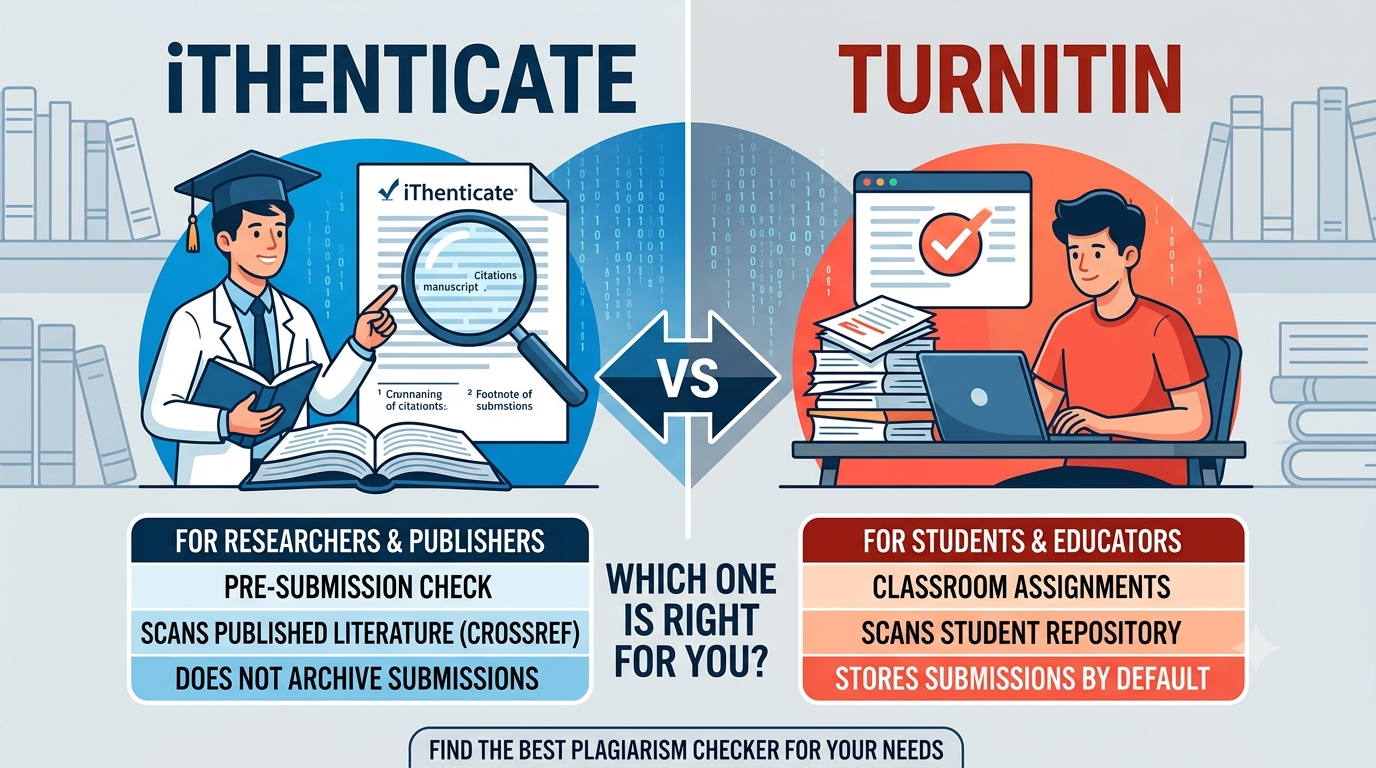
iThenticate vs Turnitin: What Is the Difference?
July 18, 2026
Want more tips & great deals? Get them sent to your inbox
Please enter a valid E-mail
By clicking "Subscribe" you agree to be contacted via e-mail. You can always unsubscribe from the newsletter


