
Ready by 8:58am Sep 30, 2026
150 Astronomy Research Topics for Students (2026)
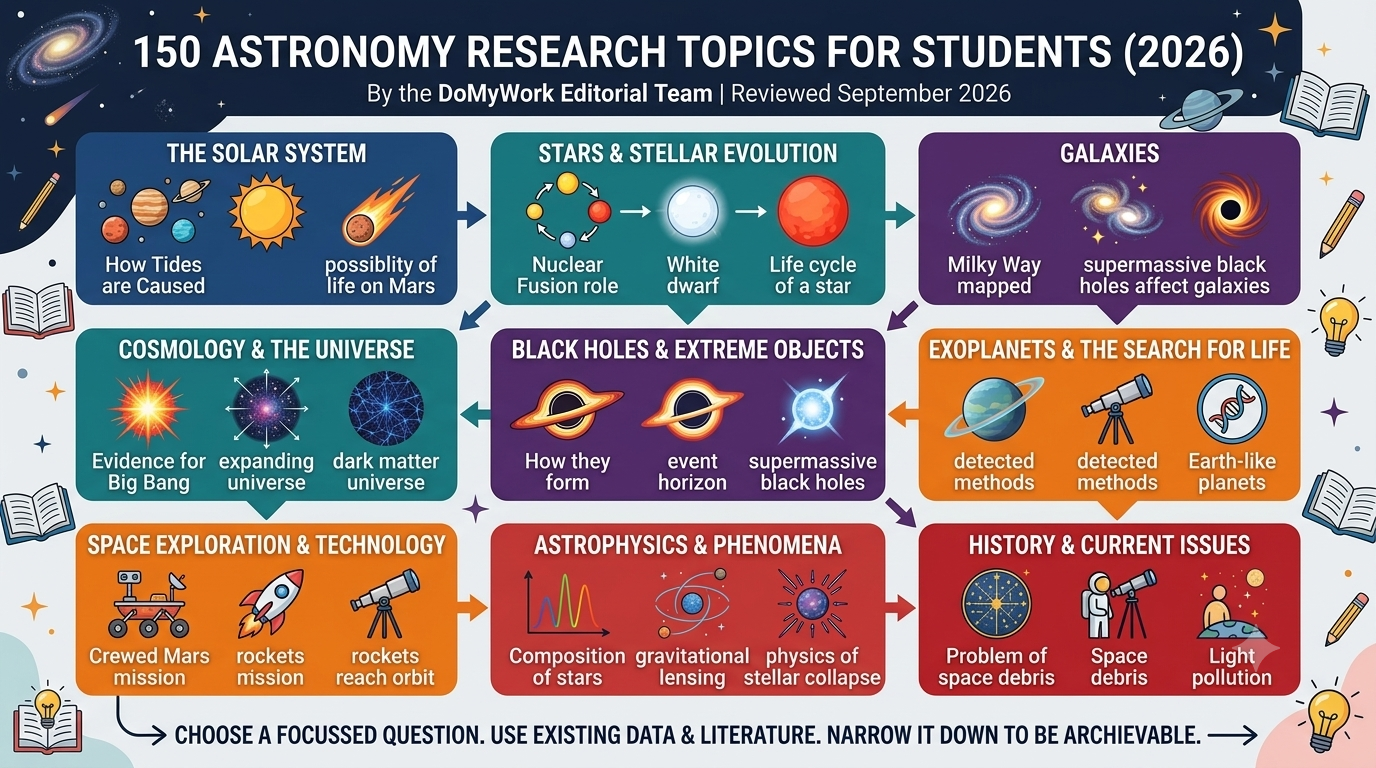
A strong astronomy research topic asks a clear question you can explore using existing data, observations and research. Good areas include the solar system, stars, galaxies, cosmology, exoplanets and space exploration. Since most student astronomy is literature or data-based, the topic should have good sources. This guide gives 150 topics grouped by area, then shows how to choose one.
Astronomy is one of the most fascinating sciences, spanning everything from our own solar system to the origins of the universe. Because students rarely have access to telescopes or original data, most astronomy research is literature or data-based, so the best topics are ones with a strong body of existing research and available data. This guide gives 150 astronomy research topics grouped by area, then shows how to choose and shape one. Our science research topics and how to write a literature review guides help you take a topic further.
What makes a good astronomy research topic?
A good astronomy topic asks a clear, specific question you can explore with existing observations, data and research, since students rarely gather their own astronomical data. It should be narrow enough to cover in depth and supported by a good body of published research, given how data-rich and fast-moving the field is. It should also connect to current astronomical knowledge. The most common mistake is choosing something too broad, such as black holes, when a focused topic like how astronomers detect supermassive black holes gives you a researchable question. Narrow every promising idea to a specific, well-documented question.
150 astronomy research topics by area
The topics below are grouped by area. Narrow any of them to a specific, researchable question with good sources.
The solar system
● How the solar system formed.
● The geology of Mars.
● How the Moon affects Earth.
● The composition of the gas giants.
● How asteroids and comets differ.
● The possibility of life on Mars.
● How the Sun produces energy.
● The exploration of the outer planets.
● How planetary atmospheres form.
● The role of Jupiter in the solar system.
● How the Kuiper Belt was discovered.
● The search for water on other planets.
● How tides are caused.
● The study of Saturn’s rings.
Stars and stellar evolution
● How stars are born.
● The life cycle of a star.
● How supernovae occur.
● The formation of neutron stars.
● How stars produce heavier elements.
● The nature of red giants.
● How white dwarfs form.
● The classification of stars.
● How binary star systems work.
● The study of variable stars.
● How stellar distances are measured.
● The end stages of massive stars.
● How brown dwarfs form.
● The role of nuclear fusion in stars.
Galaxies
● How galaxies form and evolve.
● The structure of the Milky Way.
● How galaxies collide.
● The role of dark matter in galaxies.
● The different types of galaxies.
● How supermassive black holes affect galaxies.
● The study of spiral galaxies.
● How galaxy clusters form.
● The distribution of galaxies in the universe.
● How the Milky Way was mapped.
● The nature of active galactic nuclei.
● How galaxies are classified.
● The role of gas in galaxy formation.
● How the earliest galaxies formed.
Cosmology and the universe
● The evidence for the Big Bang.
● How the universe is expanding.
● The nature of dark energy.
● The nature of dark matter.
● How the cosmic microwave background was discovered.
● The age and size of the universe.
● How the universe might end.
● The formation of the first stars.
● The evidence for cosmic inflation.
● How astronomers measure the universe.
● The role of dark matter in cosmic structure.
● How galaxies trace the structure of the universe.
● The multiverse hypothesis.
● How the universe’s expansion is measured.
Black holes and extreme objects
● How black holes form.
● How astronomers detect black holes.
● The nature of supermassive black holes.
● What happens at the event horizon.
● How gravitational waves were detected.
● The study of neutron stars.
● How pulsars work.
● The physics near a black hole.
● How the first black hole image was captured.
● The role of black holes in galaxies.
● How quasars produce energy.
● The study of magnetars.
● How stellar black holes form.
● The information paradox of black holes.
Exoplanets and the search for life
● How exoplanets are detected.
● The search for Earth-like planets.
● How the habitable zone is defined.
● The study of exoplanet atmospheres.
● How many exoplanets have been found.
● The methods of finding exoplanets.
● The search for extraterrestrial life.
● How the Kepler mission changed astronomy.
● The conditions needed for life.
● How astronomers study distant worlds.
● The role of the James Webb telescope.
● How exoplanets are classified.
● The chances of finding life elsewhere.
● How biosignatures are detected.
Space exploration and technology
● The history of space exploration.
● How telescopes have advanced astronomy.
● The future of crewed space travel.
● How space probes explore the solar system.
● The role of the International Space Station.
● How the James Webb Space Telescope works.
● The challenges of travelling to Mars.
● How satellites are used in science.
● The history of the Space Race.
● How rockets reach orbit.
● The role of private companies in space.
● How astronomers observe from space.
● The search for resources in space.
● The ethics of space exploration.
Astrophysics and phenomena
● How light reveals the composition of stars.
● The physics of gravitational lensing.
● How redshift measures distance.
● The nature of cosmic rays.
● How nuclear fusion powers stars.
● The study of gamma-ray bursts.
● How spectroscopy is used in astronomy.
● The physics of stellar collapse.
● How astronomers measure temperature in space.
● The role of gravity in the universe.
● How radiation travels through space.
● The study of interstellar dust.
● How magnetic fields shape objects in space.
● The physics of the early universe.
History and current issues
● How ancient civilisations studied the sky.
● The contributions of a chosen astronomer.
● How our understanding of the universe has changed.
● The impact of space telescopes.
● How astronomy has shaped science.
● The problem of space debris.
● The effects of light pollution on astronomy.
● How new discoveries challenge theories.
● The role of international collaboration in astronomy.
● How amateur astronomers contribute.
● The future of astronomical research.
● How major discoveries were made.
● The ethics of searching for life.
● How astronomy informs other sciences.
How to choose and shape an astronomy topic
Start from an area of astronomy that fascinates you, then narrow it to a specific question you can explore with existing research and data, since most student astronomy is literature or data-based rather than observational. Check there is a solid body of published research on your question, given how fast the field moves, and shape your topic into a clear, focused question. Because astronomy relies heavily on existing evidence, understanding the difference between using existing data and gathering your own, which our primary vs secondary research guide covers, helps you plan the study realistically.
Tips for your astronomy research
Keep your topic focused, use credible scientific sources such as journals and reputable observatories, and reference them properly. Be aware that astronomy moves quickly, so favour recent sources for current topics. Before you submit, run your finished work through our plagiarism check to confirm your referencing is complete. Whichever topic you choose above, keep it specific, make sure the sources exist, and let clear evidence and analysis carry the research.
Popular posts
Scribbr vs Turnitin: Which Plagiarism Checker Is Better? (2026)
June 5, 2026

How to Write an Annotated Bibliography (with Example, 2026)
September 1, 2026
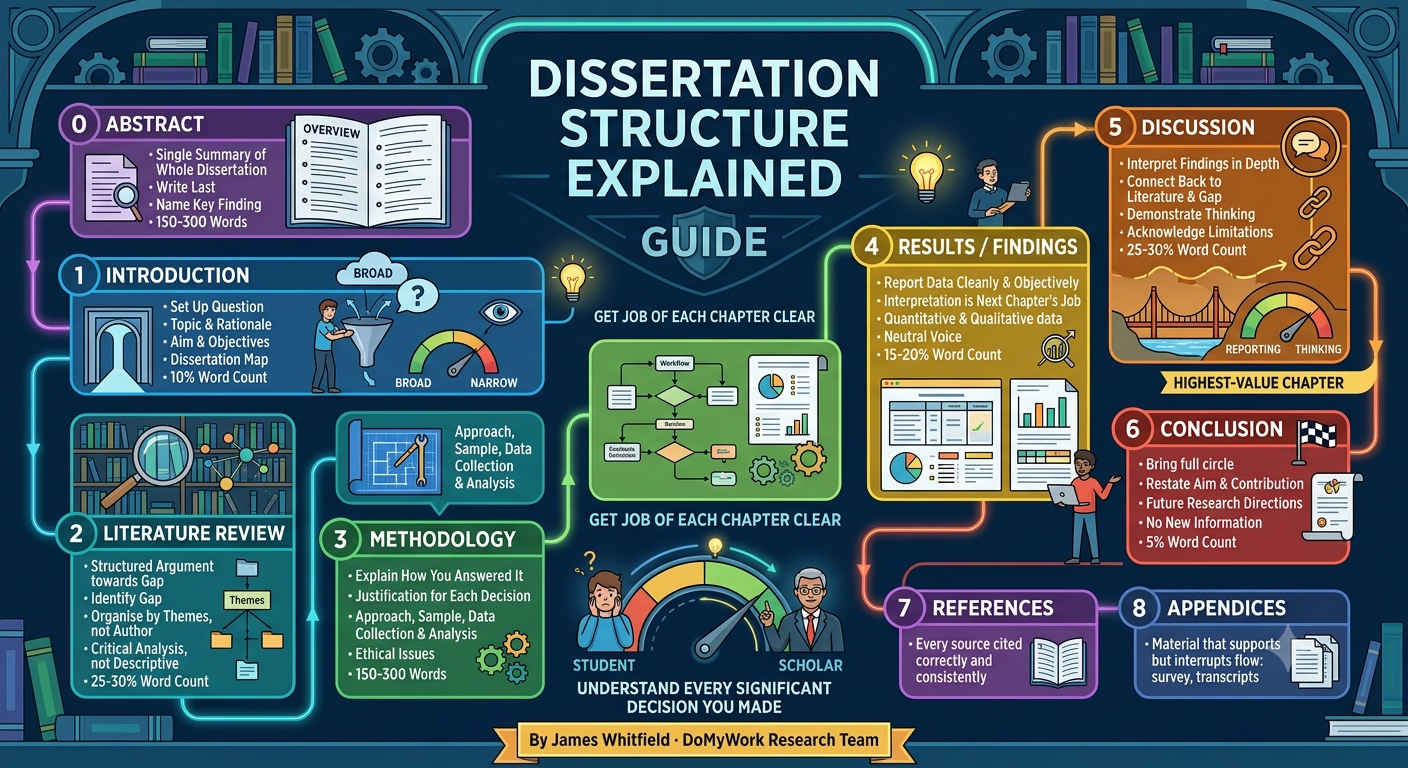
Dissertation Structure Explained Chapter by Chapter
July 11, 2026
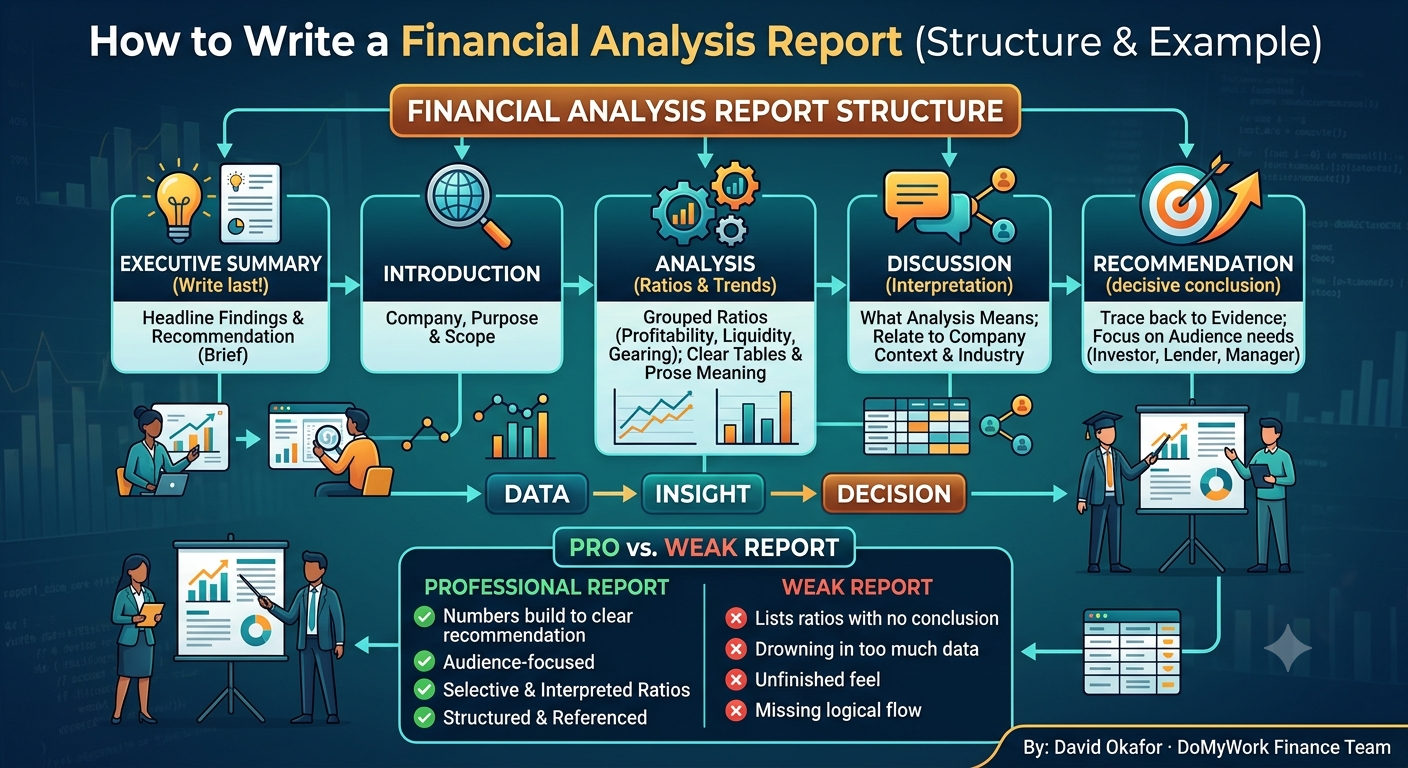
How to Write a Financial Analysis Report (Structure and Example)
July 13, 2026
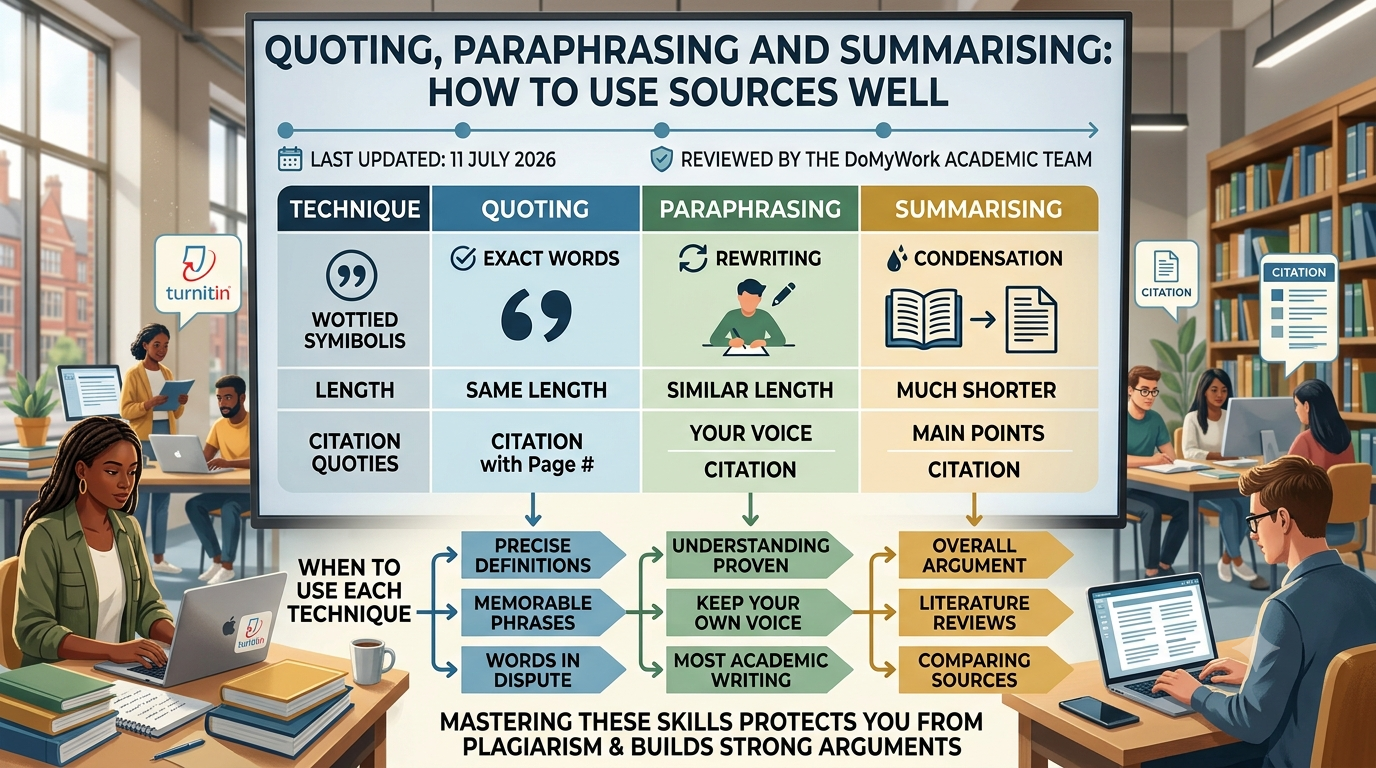
Quoting, Paraphrasing and Summarising: How to Use Sources Well
July 22, 2026
Want more tips & great deals? Get them sent to your inbox
Please enter a valid E-mail
By clicking "Subscribe" you agree to be contacted via e-mail. You can always unsubscribe from the newsletter


