
Ready by 8:31am Sep 28, 2026
150 Business Research Topics for Students (2026)
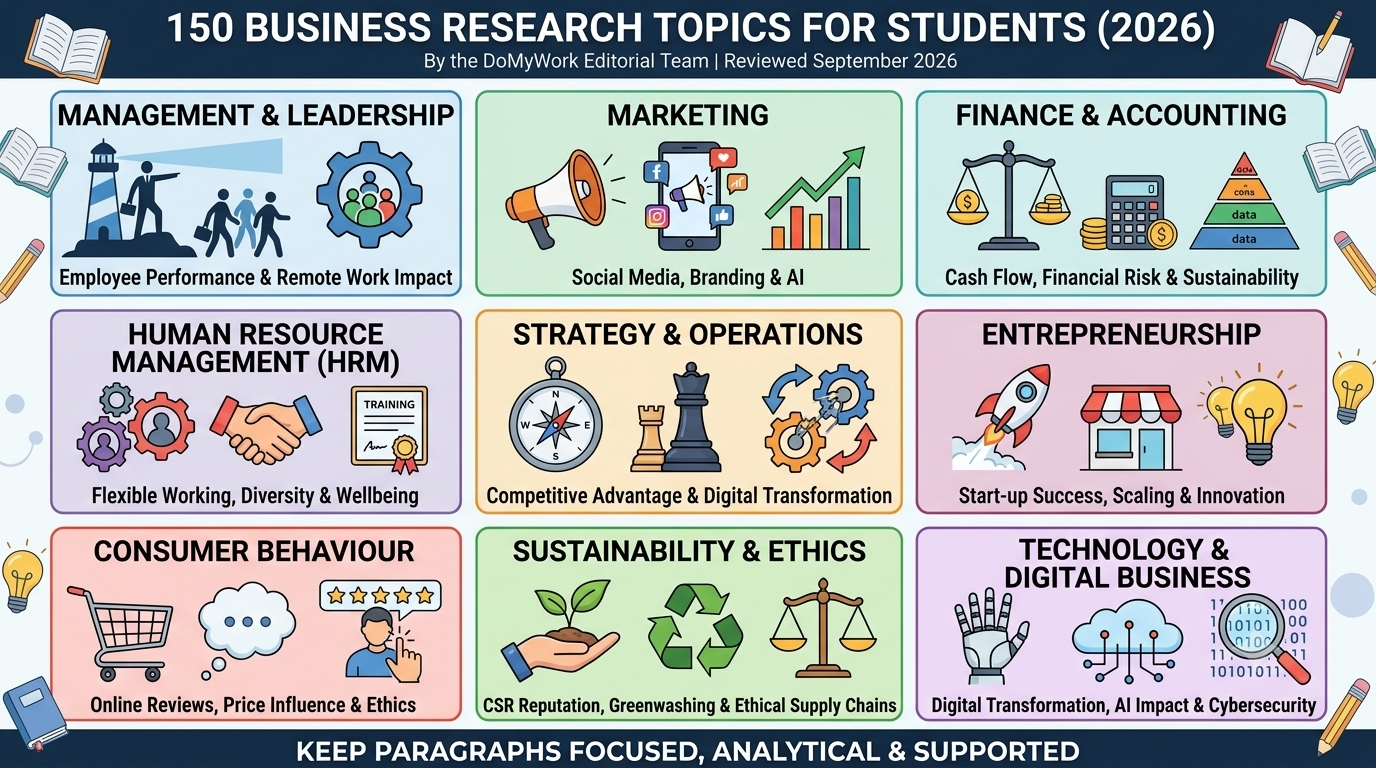
A strong business research topic is specific, researchable and relevant to current practice, focused on a clear relationship you can study with data. Good areas include management, marketing, finance, HR, strategy, operations and entrepreneurship. This guide gives 150 topics grouped by area, then shows how to shape one into a research question.
Business is a broad, practical field, which makes it a rich source of research topics but easy to pick something too general. The best topics focus on a specific relationship you can study with data, and connect to current business practice. This guide gives 150 business research topics grouped by area, then shows how to shape one into a research question. For a dissertation-length project, our business dissertation topics guide develops these further with research aims, and our how to write a literature review guide helps you build the study.
What makes a good business research topic?
A good business topic focuses on a specific relationship, such as how one business factor affects an outcome, rather than a broad area. It is grounded in a definable context, a sector, a type of company or a market, which keeps the scope manageable and the data reachable. And it connects to current practice or a gap in the research, which gives the work relevance. The most common mistake is choosing something too broad, such as marketing, when a focused topic like how social media marketing affects small-business sales gives you a clear question to research. Narrow every idea to that level.
150 business research topics by area
The topics below are grouped by area. Narrow any of them to a specific context and relationship you can research.
Management and leadership
● How leadership style affects employee performance.
● The impact of remote work on management.
● How organisational culture drives success.
● The role of emotional intelligence in leadership.
● How managers handle change.
● The effect of leadership on employee retention.
● How management style affects innovation.
● The impact of flat versus hierarchical structures.
● How managers motivate teams.
● The role of trust in management.
● How leadership affects workplace wellbeing.
● The impact of digital tools on management.
● How decision-making styles affect outcomes.
● The role of middle managers is changing.
Marketing
● How social media marketing affects sales.
● The impact of influencer marketing on trust.
● How branding builds customer loyalty.
● The effect of personalisation on buying.
● How content marketing drives awareness.
● The role of storytelling in advertising.
● How online reviews affect purchases.
● The impact of AI on marketing.
● How sustainability messaging affects buyers.
● The role of emotion in advertising.
● How loyalty programmes affect retention.
● The effect of digital advertising on privacy.
● How brands manage a crisis.
● The impact of user-generated content.
Finance and accounting
● How financial literacy affects business survival.
● The impact of cash flow on small businesses.
● How firms manage financial risk.
● The role of ratio analysis in decisions.
● How access to finance affects growth.
● The impact of interest rates on investment.
● How firms use budgeting effectively.
● The role of financial reporting in trust.
● How firms manage debt.
● The effect of pricing strategy on profit.
● How sustainability affects investment.
● The impact of financial planning on SMEs.
● How cryptocurrency affects business finance.
● The role of auditing in accountability.
Human resource management
● How training affects employee performance.
● The impact of flexible working on productivity.
● How reward systems affect motivation.
● The role of HR in employee wellbeing.
● How recruitment affects business success.
● The effect of workplace culture on retention.
● How performance appraisal affects behaviour.
● The impact of diversity on team performance.
● How HR manages remote teams.
● The role of employee engagement in productivity.
● How work-life balance affects staff.
● The impact of leadership on HR outcomes.
● How HR supports change management.
● The effect of burnout on the workforce.
Strategy and operations
● How strategy affects business growth.
● The impact of digital transformation on strategy.
● How firms build competitive advantage.
● The role of innovation in strategy.
● How operations affect efficiency.
● The impact of supply chain disruption.
● How firms manage risk strategically.
● The role of data in strategic decisions.
● How lean management affects performance.
● The effect of sustainability on strategy.
● How firms respond to competition.
● The impact of globalisation on strategy.
● How quality management affects operations.
● The role of forecasting in operations.
Entrepreneurship and small business
● How small businesses achieve growth.
● The factors behind start-up success.
● How access to finance affects start-ups.
● The role of the entrepreneurial mindset.
● How small firms build resilience.
● The impact of digital tools on SMEs.
● How start-ups scale successfully.
● The role of networks in entrepreneurship.
● How small businesses market on a budget.
● The effect of location on small firms.
● How family businesses manage succession.
● The impact of innovation on small firms.
● How social enterprises create value.
● The barriers facing small businesses.
Consumer behaviour
● How online reviews influence buying.
● The effect of scarcity on purchase decisions.
● How brand loyalty is built.
● The impact of price on consumer choice.
● How sustainability concerns affect buying.
● The role of emotion in impulse buying.
● How packaging affects choice.
● The effect of social proof on decisions.
● How culture shapes consumer behaviour.
● The impact of free trials on conversion.
● How ethical concerns affect consumption.
● The role of habit in repeat buying.
● How advertising affects behaviour.
● The effect of loyalty schemes on spending.
Sustainability and ethics
● How corporate social responsibility affects reputation.
● The impact of sustainability on business performance.
● How firms communicate ethical practices.
● The effect of greenwashing on trust.
● How sustainability affects consumer choice.
● The role of ethics in business decisions.
● How firms manage ethical supply chains.
● The impact of ESG on investment.
● How sustainable business creates value.
● The effect of ethical branding on loyalty.
● How firms balance profit and purpose.
● The role of transparency in business.
● How sustainability reporting affects firms.
● The impact of ethical leadership.
Technology and digital business
● How digital transformation affects business.
● The impact of AI on business operations.
● How e-commerce changed retail.
● The role of data analytics in decisions.
● How automation affects the workforce.
● The impact of social media on business.
● How firms manage cybersecurity risk.
● The role of technology in customer service.
● How digital tools affect productivity.
● The impact of remote technology on work.
● How firms adopt new technology.
● The effect of digital marketing on growth.
● How AI affects decision-making.
● The role of technology in innovation.
How to shape a business topic into a research question
Take your chosen area, add a specific context and a relationship to investigate, and phrase it as a question data can answer, so ‘social media marketing’ becomes ‘how does social media marketing affect sales for small retail businesses?’. Decide what data you need and whether it is best gathered fresh or drawn from existing sources, drawing on our research proposal example and qualitative vs quantitative research guides. Grounding the question in business theory and current practice is what turns it into research rather than commentary, and keeping it narrow is what makes it achievable.
Tips for your business research
Keep your topic focused, choose an area where you can realistically gather or access data, and use credible sources. Read recent business research to find a gap and current debates, and shape a clear, answerable question. Before you submit, run your finished work through our plagiarism check to confirm your referencing is complete. Whichever topic you choose above, narrow it, match the method to it, and let a clear, evidenced analysis carry the research.
Popular posts

What Do UK University Markers Actually Look For? Inside the Marking Criteria
May 14, 2026
How to Write a Financial Analysis Report (Structure and Example)
July 13, 2026

How to Make Money as a University Student in the UK
March 17, 2026
How Do You Write a Dissertation Methodology Chapter?
June 25, 2026
Vancouver Referencing: A Full Guide with Examples (2026)
August 31, 2026

Want more tips & great deals? Get them sent to your inbox
Please enter a valid E-mail
By clicking "Subscribe" you agree to be contacted via e-mail. You can always unsubscribe from the newsletter


