

Ready by 2:31am Sep 17, 2026
How to Write a Dissertation Proposal: Step by Step With an Example
A dissertation proposal is a short pitch, usually 800 to 3,000 words at undergraduate and master’s level, that makes the case for your research. It needs a focused question, a method that can answer it, and enough reading to show where your work fits. Most proposals contain seven sections: title, introduction, research question, literature review, methodology, timeline and references.
Your dissertation proposal is the document standing between your idea and your supervisor’s approval. Get it right and you save months of rewrites. Get it wrong and you either get a polite request to rethink the scope, or you drift into writing a full dissertation on the wrong question. This guide walks through exactly what a UK dissertation proposal needs, section by section, with a worked example you can model your own on.
What is a dissertation proposal, and what is it not?
A dissertation proposal is a case for the research you want to do. Think of it less as a summary and more as a pitch: you are asking your department to trust you with months of independent work, and they need three things to say yes, a question worth answering, a plan that can actually answer it, and proof you have read enough to know where your work fits. It is not a first draft of the dissertation, not a review of every paper you have read, and not a contract you can never deviate from. Most supervisors expect the final dissertation to drift from the proposal, so what they want is evidence that your starting point is sound.
How long should a dissertation proposal be?
Length varies by level and institution, so your handbook is the final word, but as a guide undergraduate and master’s proposals usually run 800 to 3,000 words, while doctoral proposals can reach 25 to 30 pages. The point is not to fill a word count but to show a clear question, a feasible plan and enough reading to place your work. A tight, focused proposal reads better than a padded one.
What sections does a dissertation proposal need?
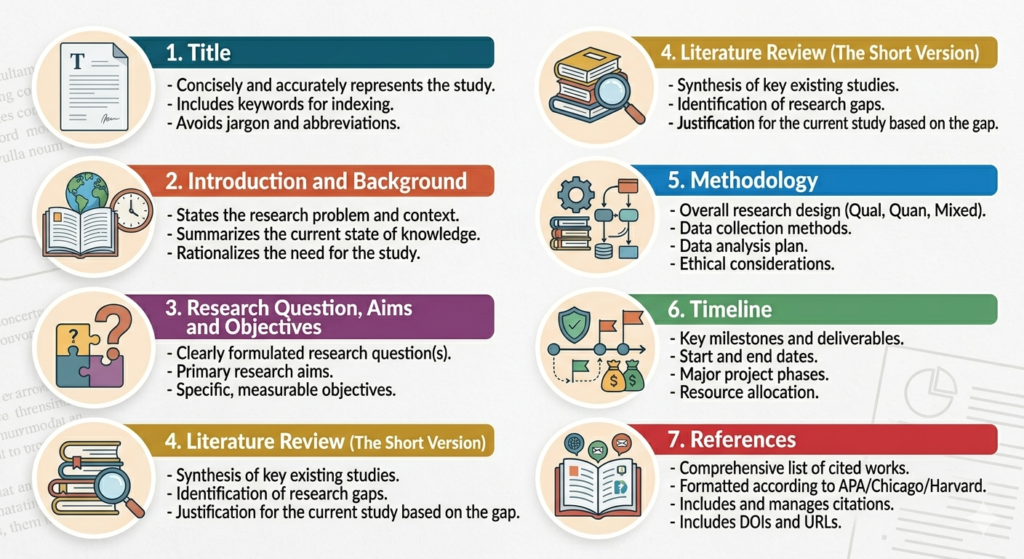
UK institutions phrase the requirements differently, but under the surface almost every proposal contains the same seven sections, in this order.
- Title
- Introduction and background
- Research question, aims and objectives
- Literature review, the short version
- Methodology
- Timeline
- References
How do I write the title?
Your title should be specific enough that a stranger understands roughly what you are investigating, but broad enough to let the research evolve. A good test: if your title could describe five different dissertations, it is too vague. Too broad is how social media affects young people. Too narrow is how Instagram use between 7pm and 9pm affects self esteem in 19 year old geography undergraduates at one named university. About right is the relationship between Instagram use and self esteem in UK university students, a mixed methods study. Titles often change, so pick one you can defend today and refine it as your reading sharpens. If you are still choosing a subject, see 15 dissertation topics trending in 2026.
How do I write the introduction and fbackground?
In roughly 200 to 400 words, set the scene: what the topic is, why it matters now, and what is already known, then end with your research question so the reader flows from context to investigation. Avoid the sweeping since the dawn of time opening, because supervisors read hundreds of proposals and spot filler in the first line. Start with a specific, current observation and tighten from there.
How do I write the research question, aims and objectives?
These three sit together because they are the backbone of the proposal. A common mistake is confusing aims with objectives. The aim is the what, your overall goal. The objectives are the how, the concrete steps that get you there. A reliable test is that if you can tick an objective off a list when it is done, it is written correctly. Keep the question focused enough to answer in your time frame, narrowing by country, population, period or mechanism until it fits your word count and deadline.
What goes in the short literature review?
The proposal’s literature review is not the full review you will write later. It has two jobs: show you know the key debates, theories or studies in your area, and identify the gap your research will fill. Most UK proposals expect 400 to 800 words here. Group the literature by theme rather than listing papers one by one, so previous research has taken two main approaches reads far stronger than a string of single study summaries. End with an explicit statement of the gap, for example that while these studies establish one thing, none have examined another in a UK context, which your research addresses.
How do I write the methodology?
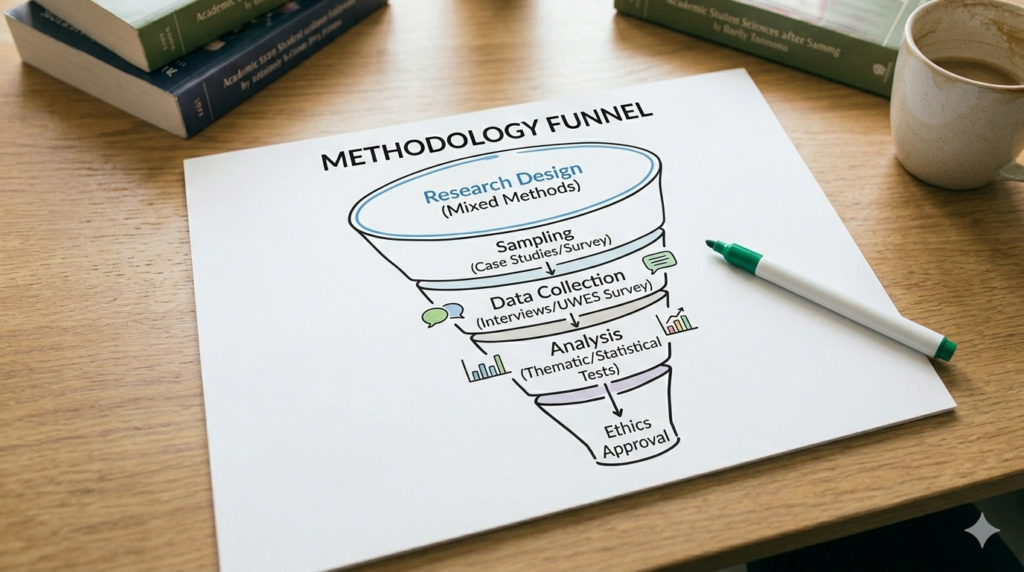
This is the section supervisors scrutinise most, because it is where weak proposals fall apart. Cover your approach, your data and how you will collect and analyse it, and be honest about feasibility. A proposal claiming 200 interviews in six weeks is flagged instantly, and a topic needing access you cannot get is dead on arrival. Before committing to a method, decide whether your study needs original fieldwork or can be answered through existing sources, a choice primary versus secondary research sets out in detail. Supervisors prefer a modest, doable plan to an ambitious one that collapses in month two.
What about the timeline and references?
For the timeline, a simple month by month table or Gantt chart shows you have thought about how the work fits the time you have, including drafting, redrafting and feedback, with a proper buffer at the end because something always overruns. For references, list every source you cited in the style your department uses, whether Harvard, APA, MHRA or OSCOLA. Ten to twenty references is normal at undergraduate and master’s level, and the Harvard referencing guide covers the formatting if your course uses it.
What does a worked example look like?

Here is a compressed business studies example showing the structure in action. Title: the impact of hybrid working on employee engagement in UK mid sized professional services firms. Introduction: since 2020 hybrid working has shifted from an emergency response to an embedded feature of UK professional services, with surveys suggesting most organisations now run some hybrid arrangement, yet engagement scores across the sector remain volatile, which this study examines. Research question: how does hybrid working affect employee engagement in mid sized UK professional services firms. Method: a mixed methods design using an employee engagement survey alongside semi structured interviews with HR leads, analysed thematically and descriptively. The point of the example is to see how each section feeds the next, from a focused question to a method that can answer it.
How do I check my proposal and dissertation before I submit?
A proposal is short enough to proofread closely, but the full dissertation that follows is long, so plan your originality checks early. Check chapters as you finish them, then run a full check before submission. You can use the plagiarism checker while you draft and confirm the final figure with an official Turnitin report for $5, which matters most for a long document where a single overlooked match can sit unnoticed.
Ready to take your dissertation further? Get specialist support.
From refining your research question and literature review to methodology, analysis and final structure, dissertation work requires careful planning at every stage. Explore our dissertation writing support for your research project.
Frequently asked questions
How long is a dissertation proposal?
Usually 800 to 3,000 words at undergraduate and master’s level, and up to 25 to 30 pages for doctoral work. Your course handbook sets the exact requirement, so check it.
What is the hardest section of a proposal?
The methodology. Supervisors scrutinise it most because it shows whether your plan can actually answer your question. Be specific and realistic about your method, data and feasibility.
What is the difference between aims and objectives?
The aim is your overall goal, the what. Objectives are the concrete steps that achieve it, the how. If you can tick an objective off when it is done, it is written correctly.
How many references does a proposal need?
Ten to twenty is normal at undergraduate and master’s level, with doctoral proposals often citing fifty or more. Quality and relevance matter more than the count.
Can my dissertation differ from my proposal?
Yes. Most supervisors expect the final dissertation to drift from the proposal as your research develops. The proposal shows your starting point is sound, not that it is fixed.
Choosing what to research first? See 15 dissertation topics trending in 2026. Ready to check a draft? Use the official Turnitin report for $5.
Popular posts

Best Student Side Hustles in the UK That Actually Pay in 2026
May 18, 2026

How Student Content Creators Can Get Paid Brand Deals in 2026
March 23, 2026

How to Check Your Turnitin Score Before Submitting
April 7, 2026
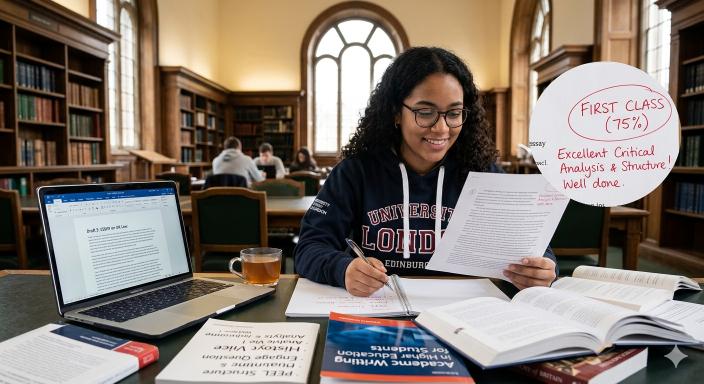
How to Write a First Class Essay at a UK University: A Complete Guide for Students
May 11, 2026
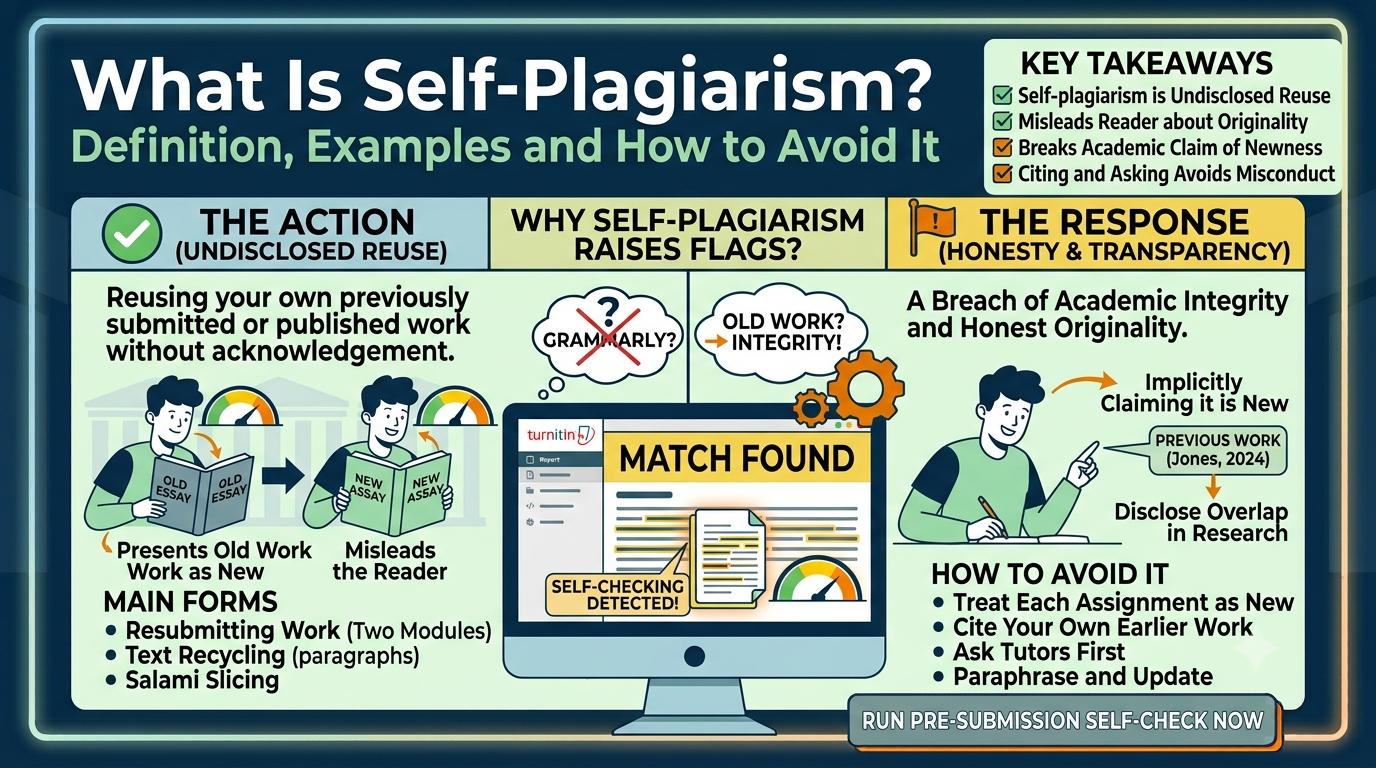
What Is Self-Plagiarism? Definition, Examples and How to Avoid It
July 23, 2026
Want more tips & great deals? Get them sent to your inbox
Please enter a valid E-mail
By clicking "Subscribe" you agree to be contacted via e-mail. You can always unsubscribe from the newsletter


