
Ready by 6:48am Sep 17, 2026
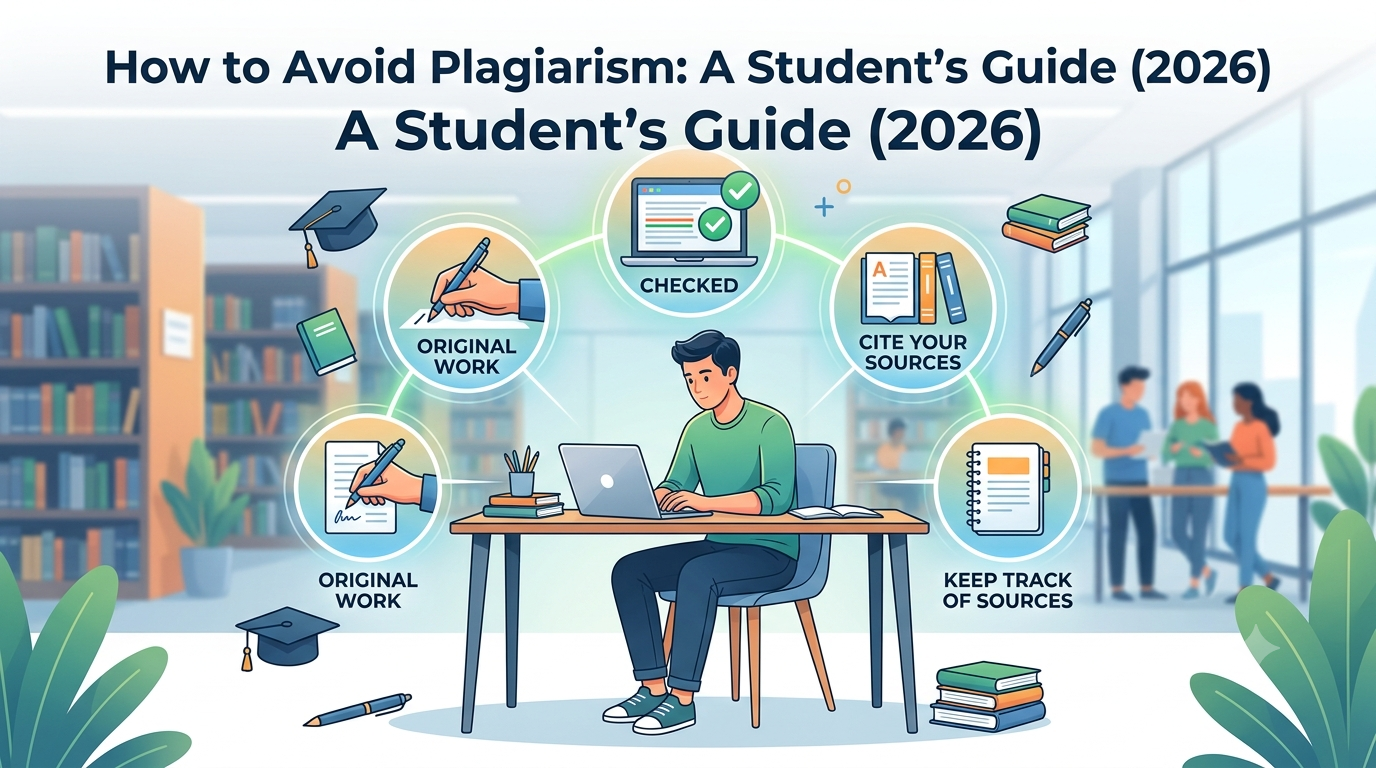
How to Avoid Plagiarism: A Student’s Guide (2026)
To avoid plagiarism, cite every source you use, paraphrase and quote properly, keep careful track of where your material comes from, and check your work before submitting. Plagiarism is presenting someone else’s words or ideas as your own, and most of it is accidental, caused by poor referencing rather than deliberate cheating.
Plagiarism is one of the most serious academic offences, and one of the easiest to commit by accident. Most students who are penalised never set out to cheat; they simply referenced carelessly, paraphrased too closely, or lost track of which notes were their own words and which were copied. The good news is that avoiding plagiarism is a set of habits you can learn, not a matter of luck. This guide explains what plagiarism is, the different forms it takes, and the practical steps that keep your work original and properly credited, so you can use other people’s research confidently while keeping your integrity, and your marks, intact.
What is plagiarism?
Plagiarism is presenting someone else’s words, ideas or work as your own, whether on purpose or by accident. It covers copying text without quotation marks, using an idea without crediting its source, paraphrasing too closely, and even reusing your own previously submitted work. The key point is that it is about credit, not just copying: if a thought, finding or argument came from somewhere else and you do not say so, that is plagiarism, even if you have reworded it. Universities treat it as a form of academic misconduct because academic work is meant to show your own understanding, built openly on the work of others with proper acknowledgement. Understanding that it hinges on giving credit, not on intent, is the first step to avoiding it.
What are the types of plagiarism?
Plagiarism takes several forms, and most accidental cases fall into the middle of this list rather than the obvious first one. The table sets them out.
| Type | What it is |
| Direct plagiarism | Copying text word for word without quotation marks or a citation |
| Mosaic or patchwriting | Changing a few words while keeping the source’s structure and phrasing |
| Improper paraphrasing | Restating an idea but staying too close to the original, or without a citation |
| Uncited ideas | Using someone’s idea, data or argument without crediting them, even in your own words |
| Self-plagiarism | Reusing your own previously submitted work without permission or acknowledgement |
| Accidental plagiarism | Any of the above caused by careless note-taking or referencing rather than intent |
Notice how few of these involve deliberate copying. The common thread is a failure to give proper credit, which is exactly why good referencing habits, rather than good intentions, are what actually protect you. A student who tracks sources carefully and cites everything is very unlikely to plagiarise, whatever their intentions; one who is casual about references can plagiarise despite meaning well.
How do you avoid plagiarism?
Avoiding plagiarism comes down to a handful of reliable habits. Build these into how you work and the risk largely takes care of itself.
- Cite every source. Whenever a word, idea, statistic or argument comes from somewhere else, credit it, whether you quoted, paraphrased or summarised.
- Paraphrase properly. Restate ideas in your own words and sentence structure, not by swapping a few synonyms, and still add the citation.
- Quote sparingly and correctly. When you use exact words, put them in quotation marks and cite them, and keep quotations rare.
- Track your sources as you research. Note where every piece of information came from at the moment you record it, so nothing is left uncredited later.
- Check your work before you submit, reviewing that every borrowed idea has a citation and that your reference list is complete.
The habit that prevents the most accidental plagiarism is tracking sources as you go. Most careless plagiarism happens when a student cannot later remember whether a note was their own thought or copied from a source, so recording the origin of every note as you take it removes the problem at the root. Paraphrasing well is the other core skill, and our how to paraphrase guide covers exactly how to restate an idea without staying too close to the original.
Does paraphrasing count as plagiarism?
Not when it is done properly and cited. Paraphrasing is a legitimate and expected academic skill: restating someone else’s idea in your own words is exactly how you are meant to use most of your sources. It becomes plagiarism only in two situations: when the paraphrase stays too close to the original wording or structure, which is patchwriting, or when you leave out the citation, so the idea appears to be your own. Restate the idea fully in your own language and credit the source, and a paraphrase is not only allowed but encouraged. Getting this right is one of the most effective ways to avoid plagiarism, because paraphrasing is how most evidence enters an essay in the first place.
How do you cite sources to avoid plagiarism?
Accurate citation is the mechanical heart of avoiding plagiarism, so it is worth doing carefully. Every time you use a source, you give an in-text citation at the point of use and a full entry in your reference list, following the style your course requires. The two must match: every in-text citation needs a reference list entry, and vice versa. Our how to cite sources guide covers the general principles, and if your course uses Harvard, our Harvard referencing guide shows the exact formats. Using a reference manager to record sources as you find them makes this far easier and cuts the risk of a missing citation slipping through.
What is self-plagiarism?
Self-plagiarism is reusing your own previously submitted work in a new assignment without permission or acknowledgement, and it surprises many students, who assume their own writing is always fair to reuse. Submitting the same essay for two modules, or recycling large sections of a past assignment, can breach academic rules because each piece of work is meant to be produced fresh for its purpose. If you want to build on your earlier work, the safe approach is to ask your tutor whether it is allowed and to acknowledge the earlier piece. Treating your own past submissions as sources to be cited, rather than material to quietly reuse, keeps you on the right side of the rules.
How do universities detect plagiarism?
Universities use text-matching software, such as Turnitin, which compares your work against a large database of published sources, web pages and previously submitted student work, and highlights matching passages. It is important to understand what this means: the tool does not exist to be outwitted, and the way to produce a clean report is simply to do your own work and cite it properly, not to disguise copied material. Markers also recognise plagiarism by eye, spotting shifts in style or arguments that do not sound like the student’s own voice. The sensible mindset is to treat these systems as a backstop for honest work rather than an obstacle: if you research properly, paraphrase in your own words and cite everything, you have nothing to worry about. Doing your own work well is always easier than trying to hide that you have not.
Common mistakes that lead to accidental plagiarism
- Not recording where a note came from, then using it later as if it were your own.
- Paraphrasing with the source in front of you, so your wording shadows the original.
- Forgetting to cite an idea because you reworded it into your own language.
- Leaving a quotation without quotation marks, so it reads as your own writing.
- Reusing your own past work without checking whether it is allowed.
Avoiding plagiarism is really about good research and writing habits, and those same habits make your work stronger and easier to produce. For fitting your properly credited evidence into a clear argument, see our how to structure an assignment guide.
Frequently asked questions
What is plagiarism?
Plagiarism is presenting someone else’s words, ideas or work as your own, whether deliberately or by accident. It hinges on giving credit, so using an idea without citing it is plagiarism even if you reword it.
How can I avoid plagiarism?
Cite every source, paraphrase and quote properly, track where your material comes from as you research, and check your work before submitting. Careful referencing habits prevent almost all accidental plagiarism.
Does paraphrasing count as plagiarism?
Not when done properly and cited. It becomes plagiarism only if you stay too close to the original wording or structure, or if you leave out the citation. Restate the idea fully in your own words and credit it.
Is reusing my own work plagiarism?
It can be. Reusing your own previously submitted work without permission or acknowledgement is self-plagiarism. If you want to build on earlier work, ask your tutor and acknowledge the original piece.
Popular posts

Best Student Side Hustles in the UK That Actually Pay in 2026
May 18, 2026

How Student Content Creators Can Get Paid Brand Deals in 2026
March 23, 2026
How to Write a First Class Essay at a UK University: A Complete Guide for Students
May 11, 2026
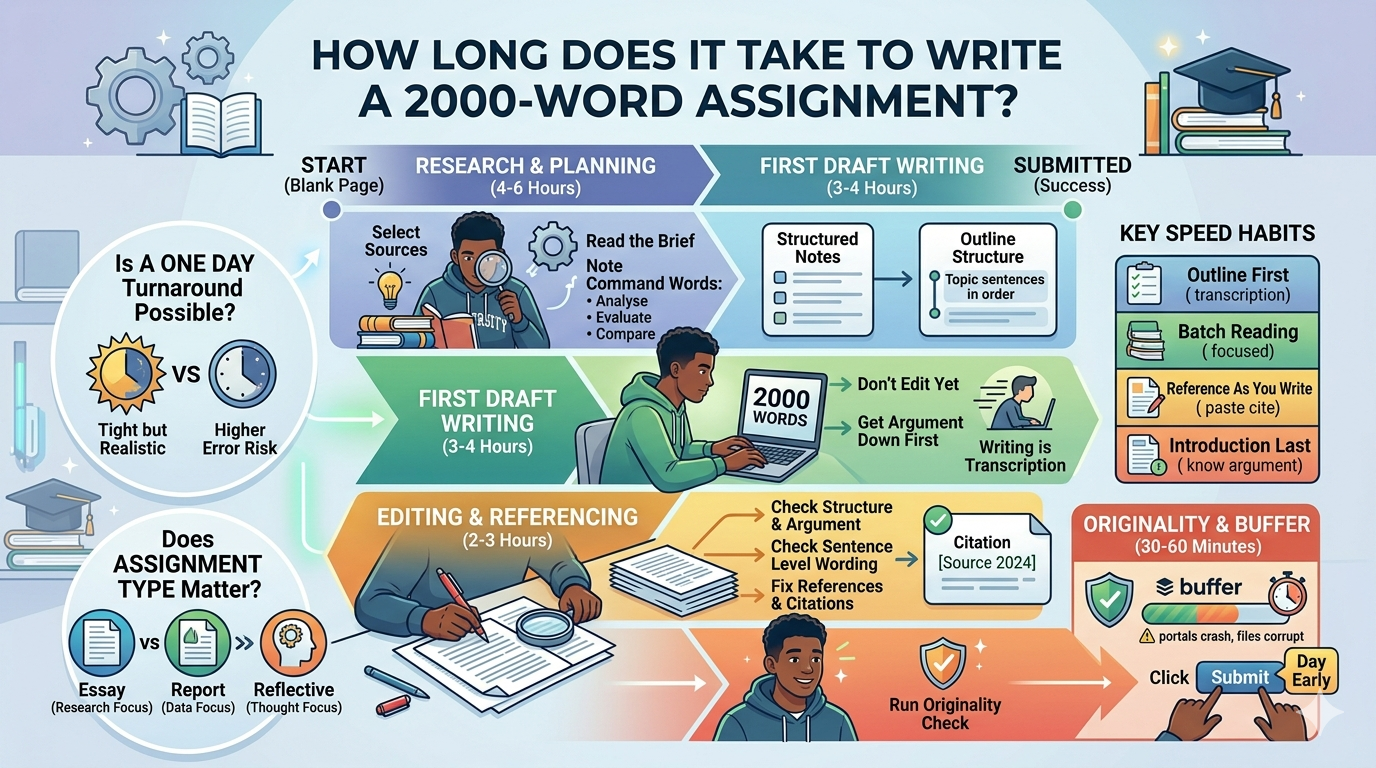
How Long Does It Take to Write a 2000 Word Assignment?
June 24, 2026
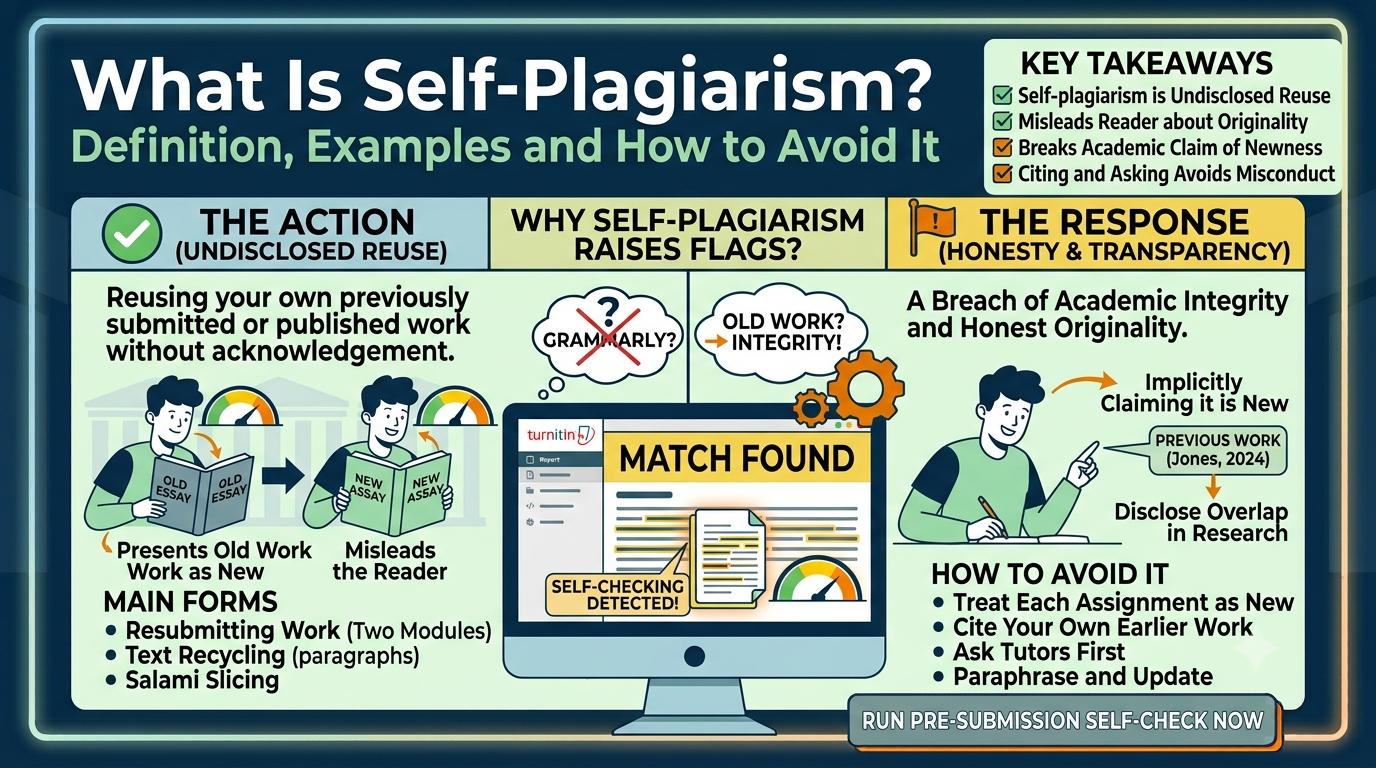
What Is Self-Plagiarism? Definition, Examples and How to Avoid It
July 23, 2026


Want more tips & great deals? Get them sent to your inbox
Please enter a valid E-mail
By clicking "Subscribe" you agree to be contacted via e-mail. You can always unsubscribe from the newsletter


