
Ready by 7:25am Sep 16, 2026
Economics Dissertation Topics: 110+ Ideas with Research Aims (2026)
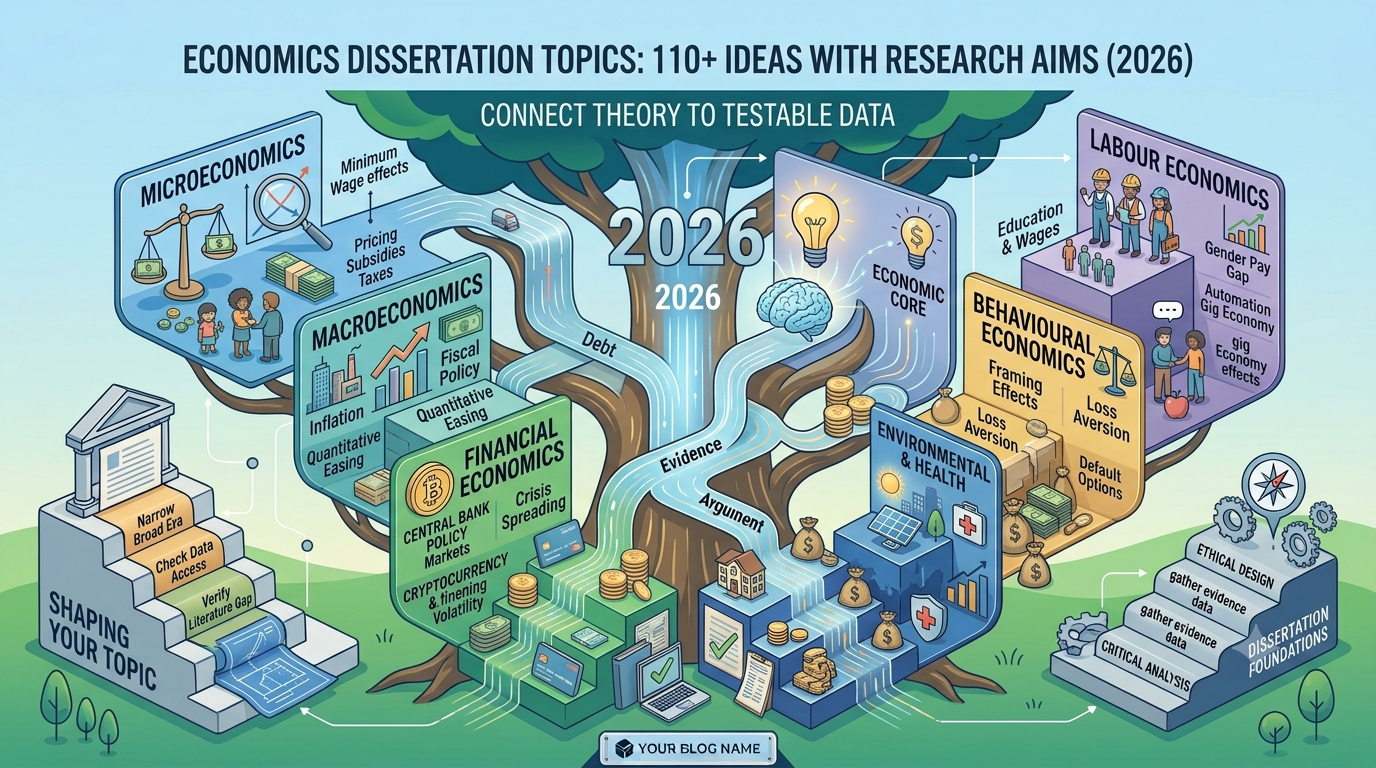
A strong economics dissertation topic is specific, researchable and current, focused on a clear relationship you can test, usually with existing data. Fruitful areas include micro and macroeconomics, labour, financial, behavioural, environmental and health economics, and public policy. This guide gives 110+ topics with six developed examples and a method for shaping any idea into a research question.
Choosing an economics dissertation topic is the first real decision of your project, and it shapes everything that follows. Economics is a broad and data-driven field, so the best topic is not the most ambitious but the one you can research well: focused on a specific relationship, testable with data you can obtain, and connected to a current issue. Because so much economics research relies on existing datasets, the choice of data and method matters early, and our primary vs secondary research guide helps you weigh whether a public dataset will serve your question better than gathering your own. This guide walks through how to choose, develops six topics to full aim-and-objectives level, then lists more than 110 further ideas grouped by area.
How do you choose a strong economics dissertation topic?
A good topic meets several conditions at once. It should be relevant to your course and current, interesting enough to sustain you for months, and narrow enough to answer within a dissertation. Above all it must be researchable in practice, and in economics that usually means data: a topic is only workable if the figures you need exist and you can access them, whether from national statistics, central banks or established datasets. A strong topic also addresses a live debate or a gap, which reading recent studies, much as you would when writing a literature review, helps you find. The most common mistake is choosing something too broad: ‘inflation’ is a field, while ‘how inflation affects consumer spending in the UK since 2020’ is a question you can investigate with data.
Six developed economics dissertation topics (with aims and objectives)
The six topics below are worked to the level your proposal will need, each with a research aim and three objectives, so you can see how a broad idea becomes a defined study.
1. The impact of minimum wage increases on employment
Research aim: To examine how increases in the minimum wage affect employment levels in low-wage sectors.
- To review the theory linking minimum wages to employment.
- To analyse the relationship using available data.
- To assess how the effect varies by sector.
2. How inflation affects consumer spending
Research aim: To investigate how changes in inflation affect patterns of consumer spending.
- To examine how inflation influences purchasing power.
- To analyse its effect on spending across categories.
- To assess how households adjust to rising prices.
3. The relationship between education and economic growth
Research aim: To analyse how investment in education affects economic growth.
- To review the theory linking human capital to growth.
- To analyse the relationship using cross-country data.
- To assess the factors that shape the effect.
4. How environmental policy affects economic outcomes
Research aim: To examine how environmental policy affects economic outcomes such as growth and employment.
- To review the main environmental policy instruments.
- To assess their effect on economic activity.
- To evaluate the trade-off between growth and sustainability.
5. The effect of interest rate changes on investment
Research aim: To investigate how changes in interest rates affect business investment.
- To review the theory linking interest rates to investment.
- To analyse the relationship using available data.
- To assess how the effect varies with economic conditions.
6. How behavioural biases affect economic decisions
Research aim: To examine how behavioural biases affect the economic decisions of individuals.
- To identify the main behavioural biases in decision-making.
- To assess their effect on economic choices.
- To consider the implications for policy.
110+ economics dissertation topics by area
The ideas below are grouped by sub-area. Treat each as a starting point to narrow around a specific context and dataset. For related fields, see our business dissertation topics and management dissertation topics guides.
Microeconomics
- How minimum wage changes affect employment.
- The effect of price changes on consumer demand.
- How competition affects prices in a market.
- The impact of subsidies on production.
- How monopolies affect consumer welfare.
- The effect of taxes on consumer behaviour.
- How firms set prices in imperfect competition.
- The impact of information asymmetry on markets.
- How elasticity affects pricing decisions.
- The effect of market regulation on outcomes.
Macroeconomics
- How inflation affects consumer spending.
- The relationship between unemployment and inflation.
- How fiscal policy affects economic growth.
- The impact of interest rates on investment.
- How government debt affects the economy.
- The effect of monetary policy on inflation.
- How exchange rates affect trade.
- The impact of quantitative easing.
- How recessions affect the labour market.
- The effect of consumer confidence on demand.
International and development economics
- How trade openness affects economic growth.
- The impact of foreign aid on development.
- How globalisation affects inequality.
- The effect of trade agreements on economies.
- How remittances affect developing economies.
- The impact of FDI on host economies.
- How institutions affect development.
- The effect of debt relief on developing countries.
- How microfinance affects poverty.
- The impact of exchange rate policy on trade.
Labour economics
- How education affects wages.
- The effect of the gender pay gap on the labour market.
- How immigration affects local wages.
- The impact of automation on employment.
- How unemployment benefits affect job search.
- The effect of trade unions on wages.
- How the gig economy affects workers.
- The impact of skills shortages on productivity.
- How minimum wages affect youth employment.
- The effect of remote work on the labour market.
Financial and monetary economics
- How interest rates affect saving and borrowing.
- The impact of central bank policy on markets.
- How financial crises spread across economies.
- The effect of credit availability on spending.
- How inflation expectations affect behaviour.
- The impact of cryptocurrency on finance.
- How banking regulation affects lending.
- The effect of stock market volatility on investment.
- How household debt affects the economy.
- The impact of fintech on financial access.
Behavioural economics
- How behavioural biases affect economic decisions.
- The effect of nudges on consumer behaviour.
- How framing affects financial choices.
- The impact of loss aversion on decisions.
- How social norms affect economic behaviour.
- The effect of default options on saving.
- How present bias affects saving decisions.
- The impact of overconfidence on investment.
- How incentives shape behaviour.
- The effect of mental accounting on spending.
Environmental economics
- How environmental policy affects the economy.
- The effect of carbon taxes on emissions.
- How markets value environmental goods.
- The economics of renewable energy.
- The impact of pollution on health costs.
- How climate change affects the economy.
- The effect of green subsidies on innovation.
- How emissions trading schemes work.
- The economics of the circular economy.
- The trade-off between growth and sustainability.
Health economics
- How healthcare spending affects outcomes.
- The economics of universal healthcare.
- How health affects labour productivity.
- The impact of an ageing population on the economy.
- How lifestyle affects healthcare costs.
- The effect of health insurance on access.
- The economics of preventive care.
- How mental health affects the economy.
- The impact of a pandemic on the economy.
- How health inequality affects outcomes.
Public economics and policy
- How taxation affects economic behaviour.
- The impact of welfare policy on inequality.
- How public spending affects growth.
- The effect of tax cuts on the economy.
- How subsidies affect market outcomes.
- The economics of public goods.
- How pension policy affects saving.
- The impact of housing policy on the market.
- How education policy affects outcomes.
- The effect of austerity on the economy.
Economic growth and productivity
- The relationship between education and growth.
- How innovation affects productivity.
- The impact of technology on economic growth.
- How infrastructure affects development.
- The effect of institutions on growth.
- How inequality affects economic growth.
- The impact of R&D on productivity.
- How globalisation affects growth.
- The effect of demographics on growth.
- How productivity gaps affect economies.
Applied and current issues
- The economic effects of Brexit.
- How the pandemic reshaped the economy.
- The economics of the cost-of-living crisis.
- How AI is affecting the labour market.
- The economics of the housing crisis.
- How supply shocks affect inflation.
- The economic impact of climate policy.
- How energy prices affect the economy.
- The economics of the digital economy.
- How inequality is changing in modern economies.
What makes a strong economics dissertation topic?
Beyond meeting the practical conditions above, the strongest topics share a clear angle. They focus on a specific relationship, such as how one variable affects another, rather than describing a broad area, which gives you something to test rather than summarise. They are grounded in a definable context, a country, a period or a market, which keeps the scope manageable and, crucially in economics, the data available. And they connect to a current issue or a gap in the literature, which gives the work relevance. A topic that combines a focused relationship, a clear context and available data will nearly always make a stronger dissertation than a broad or descriptive one.
How do you turn a topic into a research question?
A topic is a starting area; a research question is what your dissertation answers, so the next step is to sharpen one into the other. Take your chosen area, add a specific context and a relationship to investigate, and phrase it as a question data can answer, so ‘inflation’ becomes ‘how has inflation affected consumer spending in the UK since 2020?’. In economics, the availability of data usually decides feasibility, so identify your dataset early, and because most economics dissertations are empirical, our qualitative vs quantitative research guide helps you frame the analysis before you set the plan out in a research proposal. Grounding the question in economic theory is what turns it into research rather than commentary.
Tips for refining your topic
- Start from an area that interests you, then narrow to a specific, testable relationship.
- Identify the dataset you will use before committing, since data availability decides feasibility.
- Read recent economics journals to spot gaps and current debates.
- Discuss your shortlist with your supervisor early, since they can flag what is feasible.
- Keep the scope tight; a narrow question answered well beats a broad one answered thinly.
Once you have a topic and question, the next steps are designing the analysis and organising the write-up. Our how to write a dissertation methodology guide covers the research design, and our how to structure an assignment guide helps you organise the whole piece. Before you submit, it is worth checking your own finished draft for originality, which you can do with our plagiarism check. Whichever area you choose above, the same principle holds throughout: narrow the topic, secure the data, and let a clear, evidenced analysis carry the work.
Popular posts

How Student Content Creators Can Get Paid Brand Deals in 2026
March 23, 2026
40 Dissertation Viva Questions and How to Answer Them
July 9, 2026
What Is Self-Plagiarism? Definition, Examples and How to Avoid It
July 23, 2026
How to Understand Your Marking Rubric and Get a Better Grade
August 4, 2026
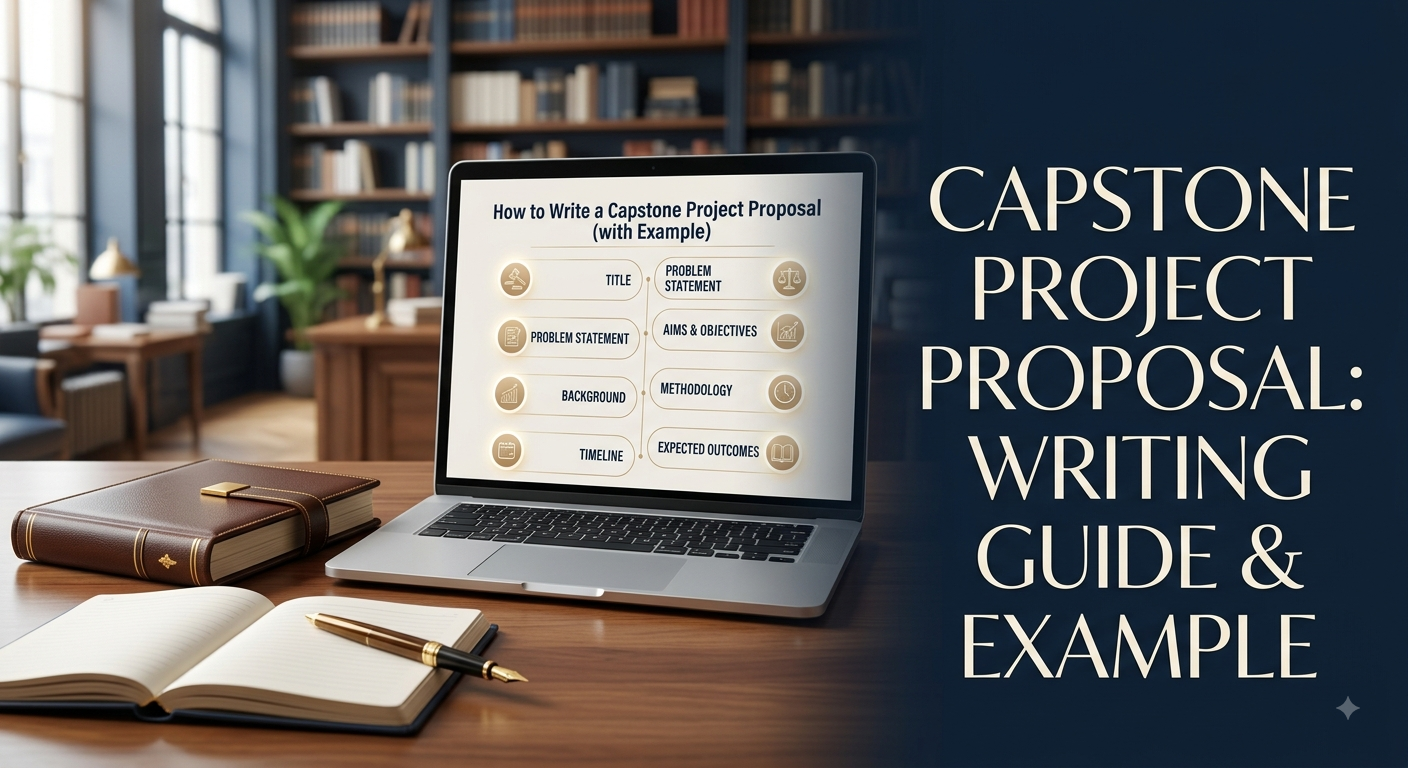
How to Write a Capstone Project Proposal (with Example)
August 13, 2026

Want more tips & great deals? Get them sent to your inbox
Please enter a valid E-mail
By clicking "Subscribe" you agree to be contacted via e-mail. You can always unsubscribe from the newsletter


