
Ready by 6:16am Sep 15, 2026
Education Dissertation Topics: 110+ Ideas with Research Aims (2026)
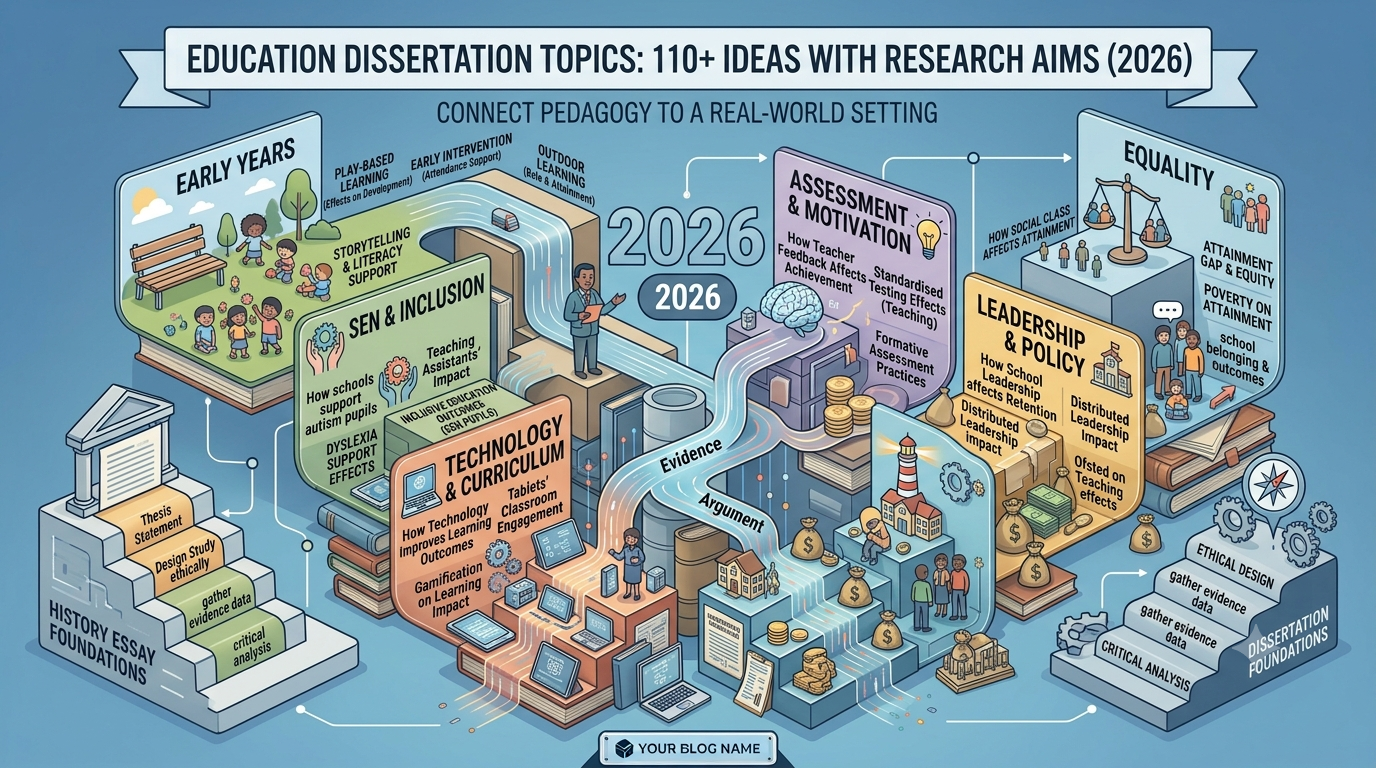
A strong education dissertation topic is specific, researchable and current, focused on a clear relationship you can study in a real educational setting. Fruitful areas include early years, pedagogy, assessment, special educational needs, educational technology, leadership and policy. This guide gives 110+ topics with six developed examples and a method for shaping any idea into a research question.
Choosing an education dissertation topic is the first real decision of your project, and it shapes everything that follows. Education is a broad, practice-based field, so the best topic is not the most ambitious but the one you can research well: focused on a specific relationship, grounded in a setting you can access, and connected to a current issue. Access matters a great deal here, since much education research involves schools, teachers or learners, and the choice between measuring outcomes and understanding experiences shapes the whole design, which our qualitative vs quantitative research guide helps you weigh. This guide walks through how to choose, develops six topics to full aim-and-objectives level, then lists more than 110 further ideas grouped by area.
How do you choose a strong education dissertation topic?
A good topic meets several conditions at once. It should be relevant to your course and current, interesting enough to sustain you for months, and narrow enough to answer within a dissertation. Above all it must be researchable in practice, which in education usually means access to a setting: a topic is only workable if you can reach the pupils, teachers or schools it needs, and any research involving children raises ethical requirements you must plan for. A strong topic also addresses a live issue or a gap, which reading recent studies, much as you would when writing a literature review, helps you find. The most common mistake is choosing something too broad: ‘technology in education’ is a field, while ‘how tablet use affects reading engagement in Year 3 pupils’ is a question you can investigate.
Six developed education dissertation topics (with aims and objectives)
The six topics below are worked to the level your proposal will need, each with a research aim and three objectives, so you can see how a broad idea becomes a defined study.
1. The impact of technology on student learning outcomes
Research aim: To examine how the use of digital technology in the classroom affects student learning outcomes.
- To assess how technology is used in teaching.
- To examine its effect on engagement and attainment.
- To identify the conditions under which it is most effective.
2. How teacher feedback affects student achievement
Research aim: To investigate how the quality of teacher feedback affects student achievement.
- To examine the features of effective feedback.
- To assess its relationship with achievement.
- To identify barriers to giving good feedback.
3. The effect of inclusive education on outcomes for SEN pupils
Research aim: To analyse how inclusive education affects the outcomes of pupils with special educational needs.
- To examine how inclusive practices are implemented.
- To assess their effect on SEN pupils’ outcomes.
- To identify the support that makes inclusion effective.
4. How parental involvement affects academic achievement
Research aim: To examine how parental involvement affects children’s academic achievement.
- To define the forms of parental involvement.
- To assess their relationship with achievement.
- To identify the barriers to involvement.
5. The impact of formative assessment on learning
Research aim: To investigate how formative assessment affects student learning and progress.
- To examine how formative assessment is used.
- To assess its effect on learning.
- To identify effective formative assessment practices.
6. How school leadership affects teacher retention
Research aim: To examine how school leadership affects the retention of teachers.
- To assess the leadership factors linked to retention.
- To examine their effect on teacher turnover.
- To identify what supports teachers to stay.
110+ education dissertation topics by area
The ideas below are grouped by sub-area. Treat each as a starting point to narrow around a setting and group you can access. The universal skills of designing and writing up research apply across all of them, and our how to structure an assignment guide helps with the write-up.
Early years and primary education
- How play-based learning affects early development.
- The impact of early phonics teaching on reading.
- How the early years environment affects learning.
- The role of outdoor learning in early years.
- How early intervention affects later outcomes.
- The impact of school readiness on attainment.
- How storytelling supports early literacy.
- The effect of class size in primary schools.
- How numeracy is best taught in early years.
- The role of parents in early learning.
Secondary education
- How setting and streaming affect attainment.
- The impact of homework on secondary outcomes.
- How motivation affects GCSE performance.
- The effect of subject choice on progression.
- How career guidance affects decisions.
- The impact of extracurricular activities.
- How peer influence affects achievement.
- The effect of transition on Year 7 pupils.
- How revision strategies affect exam results.
- The role of teacher expectations in outcomes.
Higher education
- How student engagement affects degree outcomes.
- The impact of online learning on university students.
- How assessment methods affect learning.
- The effect of student debt on participation.
- How employability is developed at university.
- The impact of widening participation.
- How international students adapt to UK study.
- The effect of contact hours on outcomes.
- How student wellbeing affects performance.
- The role of feedback in higher education.
Special educational needs and inclusion
- How inclusive education affects SEN pupils.
- The impact of teaching assistants on SEN support.
- How schools support pupils with autism.
- The effect of labelling on SEN pupils.
- How dyslexia support affects reading.
- The role of individual education plans.
- How mainstream inclusion affects outcomes.
- The impact of SEN funding on provision.
- How teachers are prepared to support SEN.
- The effect of early SEN identification.
Educational technology
- How technology affects learning outcomes.
- The impact of tablets on classroom engagement.
- How online learning affects motivation.
- The effect of gamification on learning.
- How AI tools are used in education.
- The impact of the digital divide on pupils.
- How blended learning affects outcomes.
- The effect of screen time on young learners.
- How virtual reality supports learning.
- The role of learning platforms in schools.
Curriculum and assessment
- The impact of formative assessment on learning.
- How high-stakes testing affects pupils.
- The effect of curriculum design on engagement.
- How coursework compares with exams.
- The impact of a knowledge-rich curriculum.
- How assessment feedback affects progress.
- The effect of standardised testing on teaching.
- How the curriculum reflects diversity.
- The impact of continuous assessment.
- How creativity is assessed in schools.
Teaching and pedagogy
- How teacher feedback affects achievement.
- The impact of differentiated instruction.
- How questioning affects pupil thinking.
- The effect of collaborative learning.
- How teacher-pupil relationships affect learning.
- The impact of behaviour management strategies.
- How a growth mindset affects pupils.
- The effect of teaching methods on engagement.
- How teachers use data to improve teaching.
- The role of reflection in teacher development.
Educational leadership and management
- How school leadership affects teacher retention.
- The impact of leadership on school improvement.
- How distributed leadership affects schools.
- The effect of leadership on staff wellbeing.
- How school culture affects performance.
- The impact of accountability on leaders.
- How leadership affects pupil outcomes.
- The role of leadership in change.
- How schools manage teacher workload.
- The effect of leadership on inclusion.
Equality, diversity and access
- How social class affects educational attainment.
- The impact of the attainment gap.
- How ethnicity affects school experiences.
- The effect of gender on subject choice.
- How poverty affects attainment.
- The impact of school exclusions on pupils.
- How schools promote inclusion.
- The effect of the pupil premium.
- How access to higher education varies.
- The role of education in social mobility.
Student wellbeing and behaviour
- How school affects pupil mental health.
- The impact of wellbeing programmes in schools.
- How bullying affects attainment.
- The effect of behaviour policies on pupils.
- How stress affects exam performance.
- The impact of school belonging on outcomes.
- How schools support pupil mental health.
- The effect of the school environment on wellbeing.
- How resilience is built in pupils.
- The role of relationships in behaviour.
Education policy and current issues
- How education policy affects schools.
- The impact of academies on outcomes.
- How funding cuts affect provision.
- The effect of the pandemic on learning.
- How catch-up programmes affect pupils.
- The impact of teacher shortages.
- How league tables affect schools.
- The effect of Ofsted on teaching.
- How lifelong learning policy works.
- The impact of tuition fees on participation.
What makes a strong education dissertation topic?
Beyond meeting the practical conditions above, the strongest topics share a clear angle. They focus on a specific relationship, such as how one practice affects a learning outcome, rather than describing a broad area, which gives you something to study rather than summarise. They are grounded in a definable setting, a key stage, a subject, a type of school or group of learners, which keeps the scope manageable and the access realistic. And they connect to a current issue in education or a gap in the literature, which gives the work relevance. A topic that combines a focused relationship, a clear setting and realistic access will nearly always make a stronger dissertation than a broad or descriptive one.
How do you turn a topic into a research question?
A topic is a starting area; a research question is what your dissertation answers, so the next step is to sharpen one into the other. Take your chosen area, add a specific setting and a relationship to investigate, and phrase it as a question evidence can answer, so ‘technology in education’ becomes ‘how does tablet use affect reading engagement among Year 3 pupils?’. From there you decide what evidence you need and whether you will gather it yourself or draw on existing data, a choice our primary vs secondary research guide helps you make, remembering that research with children needs ethical approval, then set the plan out in a research proposal. Grounding the question in educational theory is what turns it into research rather than opinion.
Tips for refining your topic
- Start from an area of practice that interests you, then narrow to a specific question within it.
- Check you can access the school, pupils or teachers the question needs before committing.
- Plan for ethics early, since research involving children has strict requirements.
- Read recent education journals to spot gaps and current debates.
- Keep the scope tight; a narrow question answered well beats a broad one answered thinly.
Once you have a topic and question, the next steps are designing the study and organising the write-up. Our how to write a dissertation methodology guide covers the research design, including the ethics of researching in schools. Before you submit, it is worth checking your own finished draft for originality, which you can do with our plagiarism check. Whichever area you choose above, the same principle holds throughout: narrow the topic, secure your access, and let a clear, evidenced study carry the work.
Popular posts
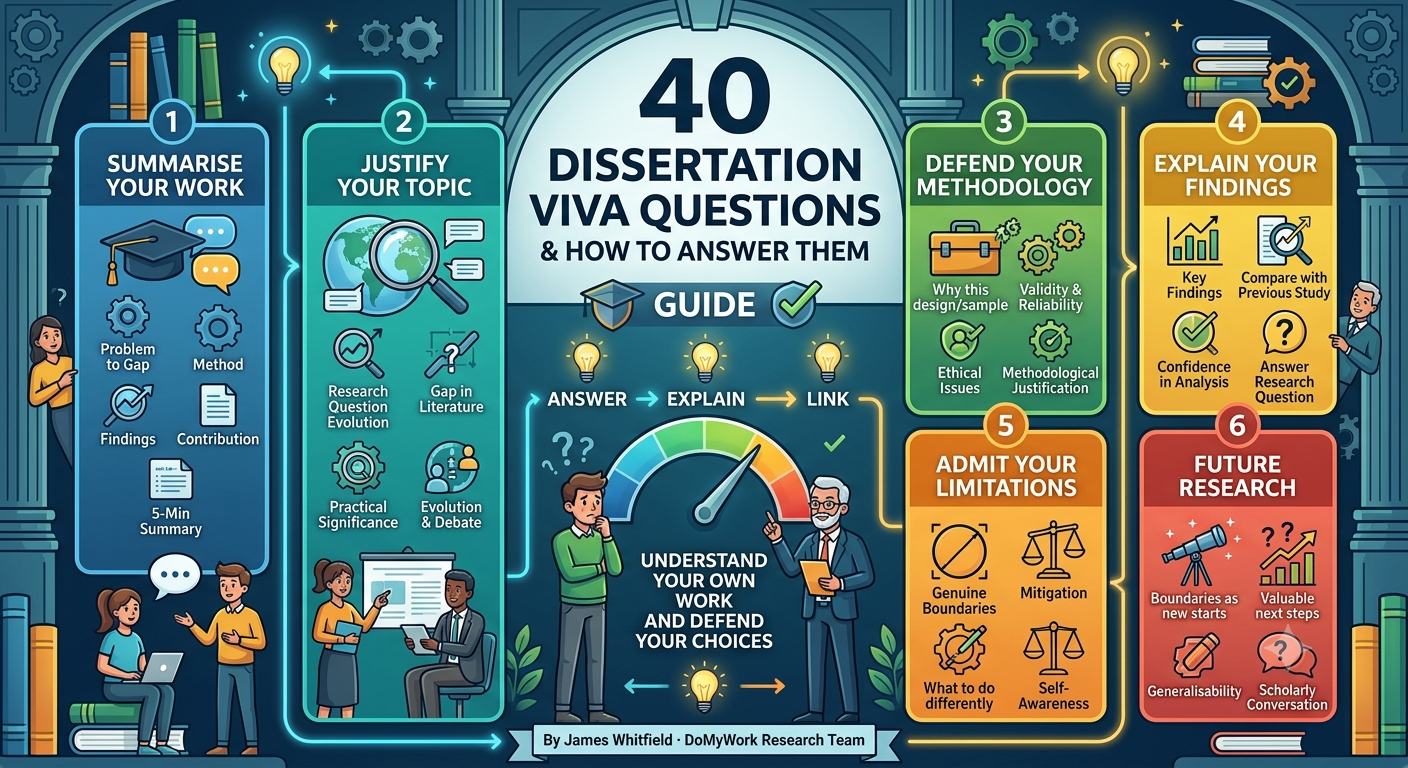
40 Dissertation Viva Questions and How to Answer Them
July 9, 2026
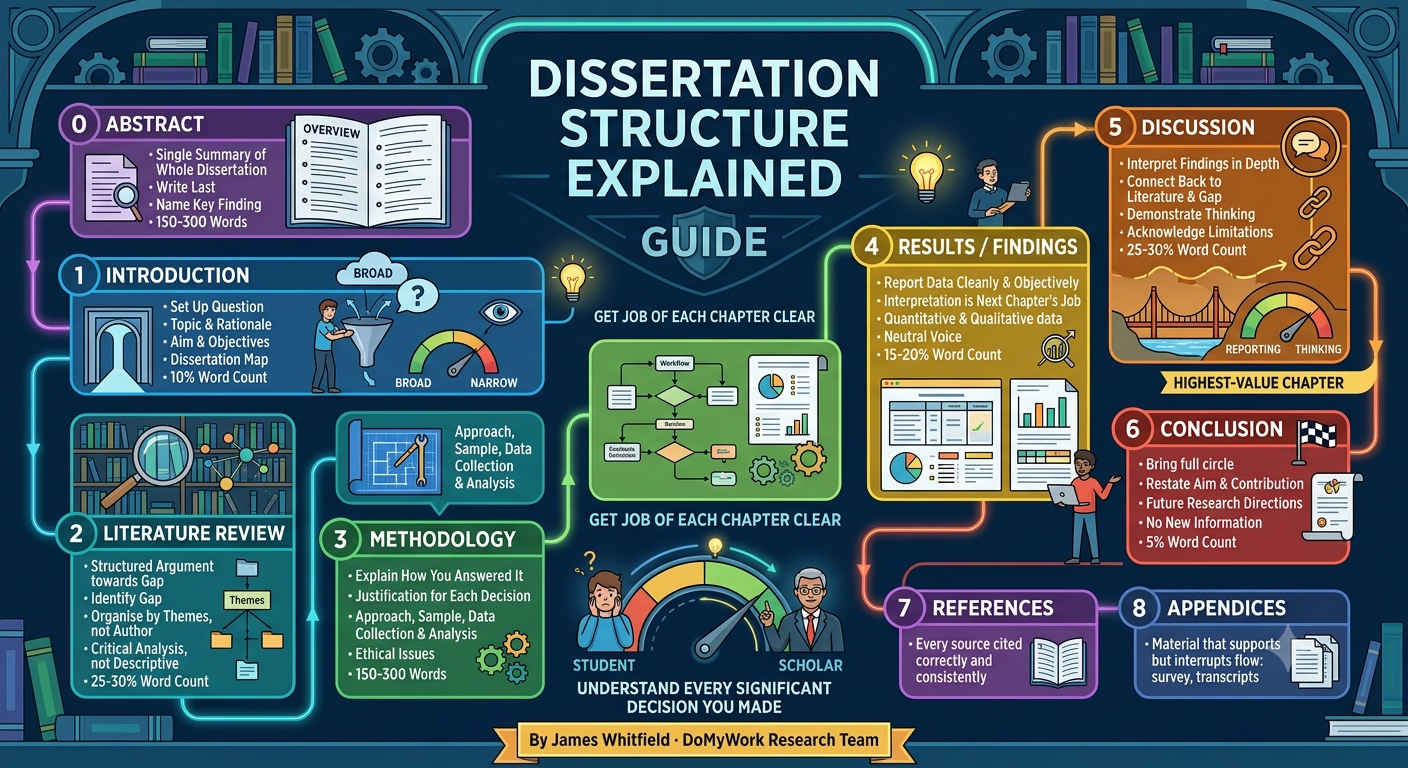
Dissertation Structure Explained Chapter by Chapter
July 11, 2026

Best Student Side Hustles in the UK That Actually Pay in 2026
May 18, 2026
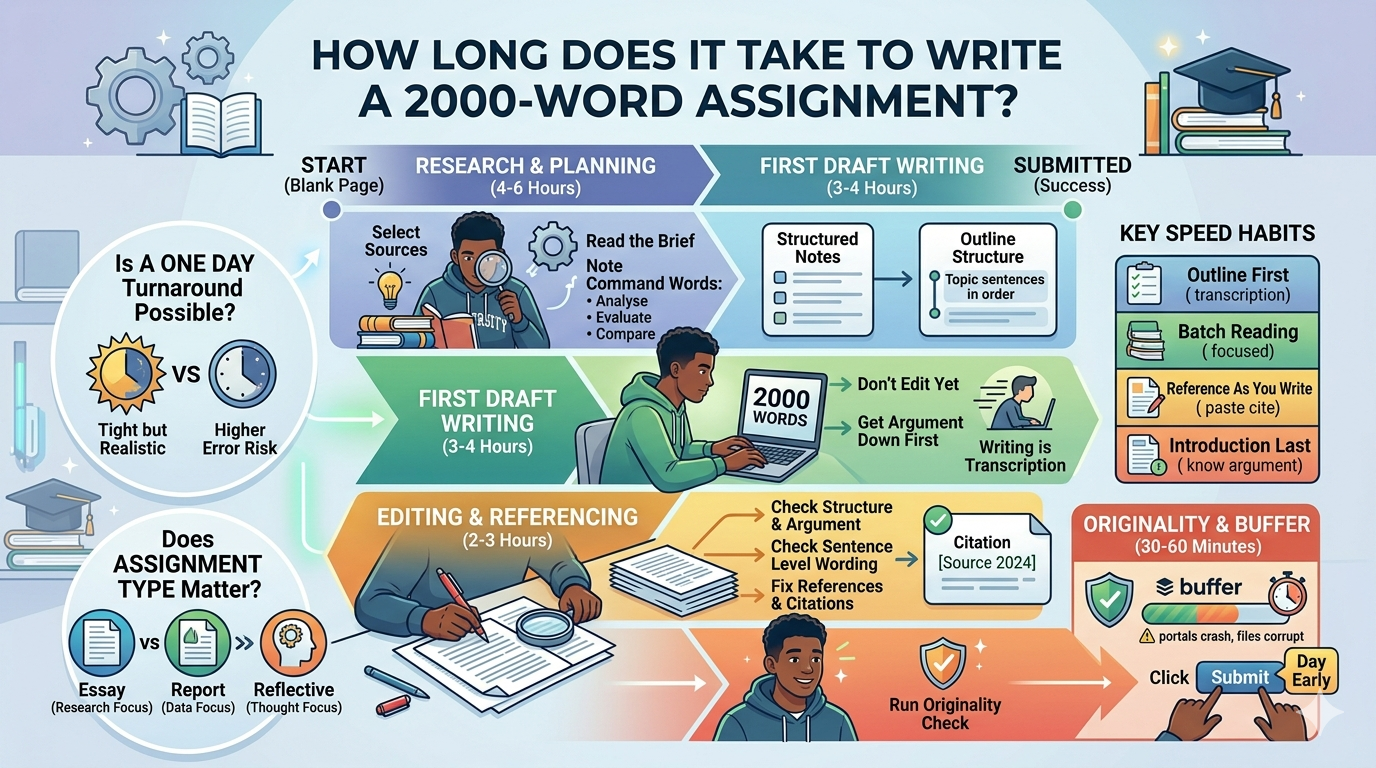
How Long Does It Take to Write a 2000 Word Assignment?
June 24, 2026

How to Write a Reflective Commentary for Culinary Coursework
July 6, 2026


Want more tips & great deals? Get them sent to your inbox
Please enter a valid E-mail
By clicking "Subscribe" you agree to be contacted via e-mail. You can always unsubscribe from the newsletter


