
Ready by 5:58am Sep 17, 2026
130 Compare and Contrast Essay Topics (2026)
A compare and contrast essay examines the similarities and differences between two subjects and what those reveal. The best topics pair two things that are genuinely comparable but different enough to be interesting. Strong areas include literature, history, science, society, business, psychology and the arts. Choose a pair with a real basis for comparison, then analyse what the differences mean.
A compare and contrast essay is one of the most common assignments across school and university, and the topic decides how well it can go. The two subjects have to share enough common ground to be worth comparing, yet differ enough to give you something to say, and the marks come from analysing what those differences mean rather than simply listing them, which is the same move from description to analysis that our critical writing guide develops. This guide gives 130 paired topics grouped by subject, then shows how to pick a pair and build the essay.
What makes a good compare and contrast pair?
The strongest pairs sit in the same broad category but differ in a meaningful way, so there is a genuine basis for comparison and a real point to draw out. A few examples show the idea:
- Two leadership styles: Comparable because both concern how leaders influence people, but different enough to reveal what each does well.
- The French and American Revolutions: Both overturned an old order, yet their causes and outcomes differ in ways worth analysing.
- A novel and its film adaptation: The same story in two media, which lets you explore what each form can and cannot do.
- Online versus in-person learning: A single activity delivered two ways, ideal for weighing trade-offs.
Avoid pairs that are so different they share no basis for comparison, or so similar there is nothing to contrast. A good pair lets you move past listing differences into arguing what they reveal, which is where the essay earns its marks.
130 compare and contrast essay topics by subject
Each pair below is a starting point. Sharpen it around the specific angle you want to argue.
Literature and language
- Two novels by the same author.
- A book and its film adaptation.
- Two poems on the same theme.
- Tragedy versus comedy as forms.
- Two protagonists from different novels.
- First-person versus third-person narration.
- Classic literature versus modern fiction.
- Two writers from the same movement.
- Fiction versus non-fiction storytelling.
- British English versus American English.
- Two Shakespearean characters.
- Poetry versus prose as forms.
- A play versus its stage adaptation.
- Two dystopian novels.
- Oral storytelling versus written literature.
- Two translations of the same text.
History and politics
- The French Revolution versus the American Revolution.
- Two world leaders of the same era.
- Democracy versus authoritarian rule.
- The First versus the Second World War.
- Two empires and their decline.
- Capitalism versus socialism.
- Two civil rights movements.
- Ancient Athens versus ancient Sparta.
- Two responses to the same crisis.
- Monarchy versus republic.
- The Cold War versus the War on Terror.
- Two revolutions in different centuries.
- Colonialism versus decolonisation.
- Two political ideologies.
- A war’s causes versus its consequences.
- Two approaches to nation-building.
Science and technology
- Renewable versus fossil-fuel energy.
- Online versus in-person learning.
- Android versus iOS.
- Nature versus nurture.
- Two theories of the same phenomenon.
- Electric versus petrol vehicles.
- Traditional versus alternative medicine.
- Two programming languages.
- Space versus ocean exploration.
- AI versus human decision-making.
- Nuclear versus solar power.
- Two scientific revolutions.
- Genetic engineering versus natural selection.
- Two models of the atom.
- Wired versus wireless technology.
- Two approaches to data privacy.
Society and culture
- City life versus rural life.
- Two generations and their values.
- Individualist versus collectivist cultures.
- Traditional versus modern families.
- Two approaches to work-life balance.
- Reading versus watching a story.
- Two cultural festivals.
- Social media versus face-to-face contact.
- Introversion versus extroversion.
- Two education systems.
- Eastern versus Western philosophy.
- Two approaches to parenting.
- Print versus digital news.
- Two religions’ views on a shared question.
- Local versus global identity.
- Two immigrant experiences.
Business and economics
- Two leadership styles.
- Startups versus established firms.
- Remote versus office working.
- Two marketing strategies.
- Product-led versus sales-led growth.
- Two business models in one sector.
- Ethical versus profit-first business.
- Franchising versus independent ownership.
- Two responses to market disruption.
- Local versus global brands.
- Traditional versus digital advertising.
- Two pricing strategies.
- Employee versus freelance models.
- Two approaches to customer service.
- A market leader versus a challenger.
- Two economic systems.
Education and lifestyle
- Homeschooling versus traditional schooling.
- Exams versus coursework as assessment.
- Two study methods.
- A gap year versus going straight to university.
- Two approaches to fitness.
- Cooking at home versus eating out.
- Two diets.
- Owning versus renting a home.
- Two ways to learn a language.
- Public versus private education.
- Two approaches to time management.
- Travelling versus staying local.
- Two hobbies and their benefits.
- Saving versus spending habits.
- Two commuting options.
- A morning versus an evening routine.
Psychology, philosophy and the arts
- Nature versus nurture in personality.
- Two theories of motivation.
- Optimism versus pessimism as outlooks.
- Two schools of philosophy.
- Free will versus determinism.
- Two art movements.
- Classical versus modern music.
- Two painting styles.
- Realism versus abstraction in art.
- Two approaches to happiness.
- Emotion versus reason in decisions.
- Two theories of learning.
- Ancient versus modern ethics.
- Two views on the meaning of life.
- Traditional versus digital art.
- Two architectural styles.
Media, sport and daily life
- Television versus streaming.
- Two sports and their demands.
- Books versus audiobooks.
- Two social media platforms.
- Team sports versus individual sports.
- Two news sources and their bias.
- Video games versus board games.
- Two forms of exercise.
- Cinema versus home viewing.
- Two smartphone brands.
How to structure a compare and contrast essay
Once you have your pair, the structure is what makes the comparison land. Decide your basis for comparison first, the specific points you will weigh both subjects against, and state your overall line in a clear thesis statement so the reader knows what the comparison is for. Then choose one of two structures and hold it throughout: point by point, alternating between the two subjects for each criterion, or subject by subject, covering one fully and then the other. Whichever you pick, keep the essay organised around your points rather than letting it drift, which is where the wider principles in our how to structure an assignment guide help. Above all, analyse rather than list: for every similarity or difference, say what it reveals, because that analysis is the difference between a description and an argument, and it is what earns the marks.
Choosing the right pair for your essay
With 130 pairs above, choose on two grounds: a genuine basis for comparison, and your own interest. A pair you find interesting is easier to write well, and a pair with a real point of tension gives you something to argue rather than merely describe. Check the pair that suits your subject and the length you have been set, then narrow it to the specific angle you want to explore, since ‘two leadership styles’ becomes far stronger as ‘why transformational leadership suits startups better than a transactional style’. Whichever pair you choose, the same rule applies throughout: pick a comparison with real tension, and let your analysis of the differences, not a list of them, carry the essay.
Popular posts

Best Student Side Hustles in the UK That Actually Pay in 2026
May 18, 2026
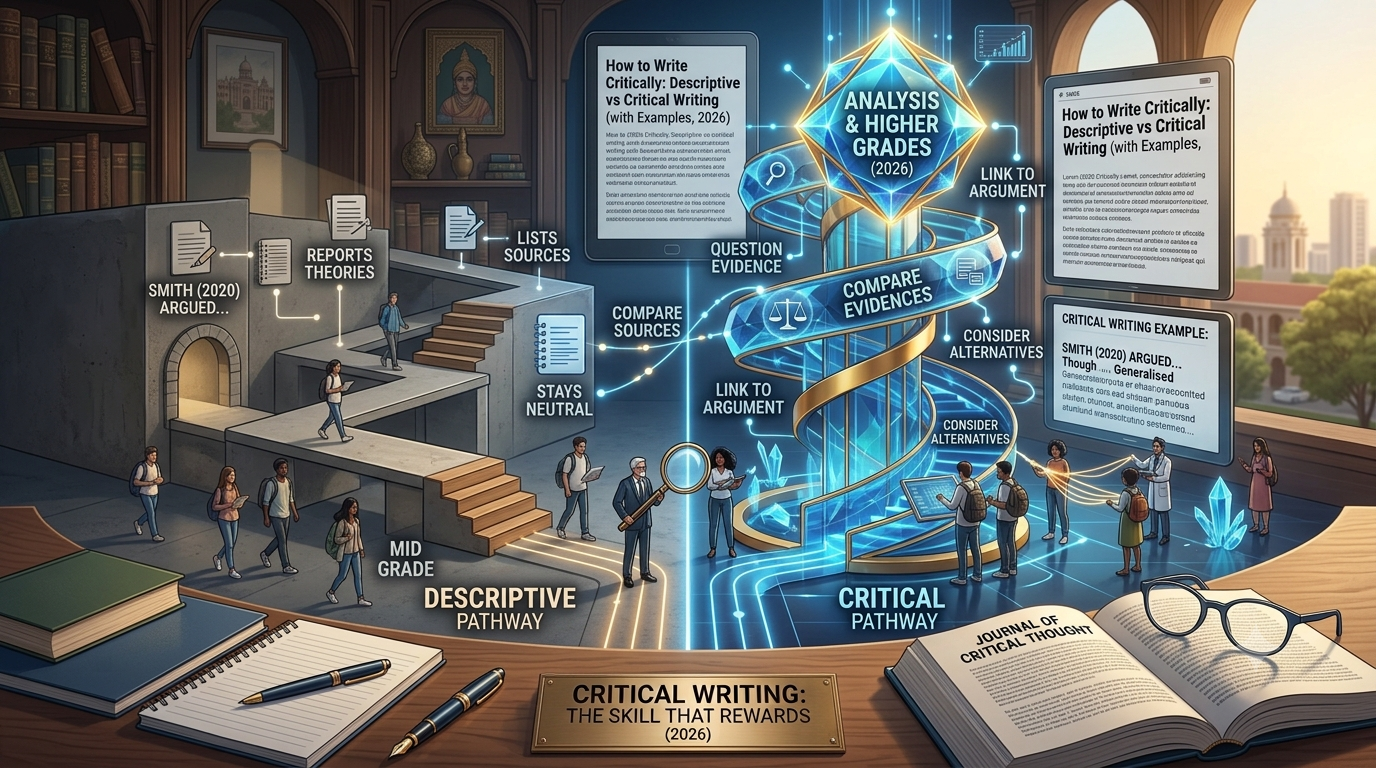
How to Write Critically: Descriptive vs Critical Writing (with Examples, 2026)
August 24, 2026

How Student Content Creators Can Get Paid Brand Deals in 2026
March 23, 2026

How to Check Your Turnitin Score Before Submitting
April 7, 2026
How to Write a First Class Essay at a UK University: A Complete Guide for Students
May 11, 2026
Want more tips & great deals? Get them sent to your inbox
Please enter a valid E-mail
By clicking "Subscribe" you agree to be contacted via e-mail. You can always unsubscribe from the newsletter


