
Ready by 1:47pm Oct 7, 2026
Proper Essay Format: A Complete Guide (2026)
Proper essay format usually means a readable font such as Arial or Times New Roman at 12 point, double or 1.5 line spacing, margins of around 2.5cm, page numbers, and consistent referencing in your required style. Always follow your university’s specific formatting guidelines first, since exact requirements vary by institution and style.
Formatting will not turn a weak essay into a strong one, but poor formatting can undermine a good essay and cost easy marks, so it is worth getting right. Proper essay format covers the practical presentation of your work: the font, spacing, margins, title page, page numbers and referencing style. This guide sets out the standard conventions, with the differences between the main referencing styles, so your essay looks professional and meets your guidelines. The single most important rule, though, is to follow your own university’s requirements, since these override any general advice.
Follow your university’s guidelines first
Before anything else, check your assignment brief and your department’s formatting guidelines, because exact requirements vary between universities, courses and even individual assignments. Some specify a particular font, spacing and referencing style precisely, and following them is part of what is assessed. Where your brief is specific, its instructions always take priority over the general conventions below. The general standards in this guide are a reliable default when no specific guidance is given, but treating your own institution’s requirements as the final word is the safest approach, since presentation marks are easy to lose by ignoring a stated rule.
Font, spacing and margins
The standard conventions for the body of an essay are straightforward. Use a clear, readable font, most commonly Arial, Calibri or Times New Roman, at 11 or 12 point. Use double or 1.5 line spacing, which makes the text easy to read and leaves room for marker comments. Set margins of around 2.5cm, or one inch, on all sides. Align your text to the left, which is standard for academic work, rather than justified, which some guidelines discourage. These conventions produce a clean, readable page, but as always, defer to any specific requirements your university sets on font, size and spacing.
Title page and headings
Whether you need a title page depends on your brief. Many essays require one giving the title, your name or student number, the module, and the date, while others simply need this information at the top of the first page. Follow your guidelines. On headings, remember that a standard essay is usually written as continuous prose without section headings, unlike a report, so do not add headings unless your brief asks for them, as our headings in essays and research papers guide explains. Where headings are used, format each level consistently. Getting the title page and heading conventions right signals care and follows the expectations of academic presentation.
Page numbers and other details
Small formatting details add up. Include page numbers, usually in the header or footer, since they are expected and help the reader. Some guidelines ask for a header with your name or the module code on each page. Indent or space your paragraphs consistently, following one convention throughout rather than mixing them. Keep the whole document consistent in its formatting, since inconsistency, a heading in one style here and another there, looks careless. These details are quick to get right and quick to notice when wrong, so a final pass to check page numbers, headers and consistency is time well spent before you submit.
Referencing format
Referencing is the part of formatting most closely tied to your marks, and it must follow your required style consistently. In-text citations and the reference list are formatted differently in each style: Harvard and APA use author-date citations and an alphabetical reference list, MLA uses author-page citations and a Works Cited list, and numeric styles use numbered citations. Whichever you use, format every citation and entry to its rules and keep it consistent throughout. Our how to cite sources guide covers the mechanics, and our style-specific guides, including Harvard and APA, cover the details. Correct, consistent referencing is a core part of proper essay format.
Formatting quotations and the reference list
Quotations and the reference list have their own formatting conventions. Short quotations are usually run into your sentence in quotation marks, while longer quotations, typically over about 40 words, are set as an indented block without quotation marks, though the exact threshold depends on your style. Your reference list starts on a new page, is titled according to your style, and lists entries alphabetically (or by number in numeric styles), usually with a hanging indent. Getting these conventions right, especially the consistent formatting of the reference list, is part of presenting a polished, correctly formatted essay, and it is exactly the kind of detail a marker checks.
Why formatting affects your marks
It is tempting to treat formatting as trivial next to the argument, but it affects your marks in two real ways. First, presentation is sometimes assessed directly, with marking criteria that reward a well-presented, correctly formatted piece of work, so sloppy formatting simply loses those marks. Second, and more subtly, good formatting shapes how a marker reads your work: a clean, correctly formatted essay signals care and competence before the marker has read a word, while a messy one, inconsistent spacing, missing page numbers, a badly formatted reference list, creates a poor first impression that can colour the whole reading. Correct referencing format matters most of all, since referencing errors are penalised directly and can even raise questions about academic integrity. None of this means formatting can rescue a weak essay, but it does mean that neglecting it can quietly cost a strong one, which is why a careful formatting pass before submission is always worth the few minutes it takes.
A useful habit is to set up your formatting correctly at the very start, before you write a word, rather than fixing it at the end. Setting your font, spacing and margins, adding page numbers, and choosing your referencing style at the outset means the whole document is consistent as it grows, and it saves you the tedious, error-prone job of reformatting a finished essay under deadline pressure. Some students keep a simple template that already has the right settings, which removes the decision each time. Getting the format right from the first line lets you focus on the writing rather than the presentation.
A final formatting checklist
Before you submit, run through a quick formatting check: readable font at the right size, correct line spacing, standard margins, page numbers present, a title page or heading block if required, consistent paragraph formatting, and a reference list correctly formatted in your style. Confirm the whole document is consistent, and that you have followed every specific instruction in your brief. It is also worth running your finished essay through our plagiarism check to confirm your referencing is complete. A few minutes on formatting protects the easy marks that presentation carries and lets your argument be read as you intended.
Popular posts
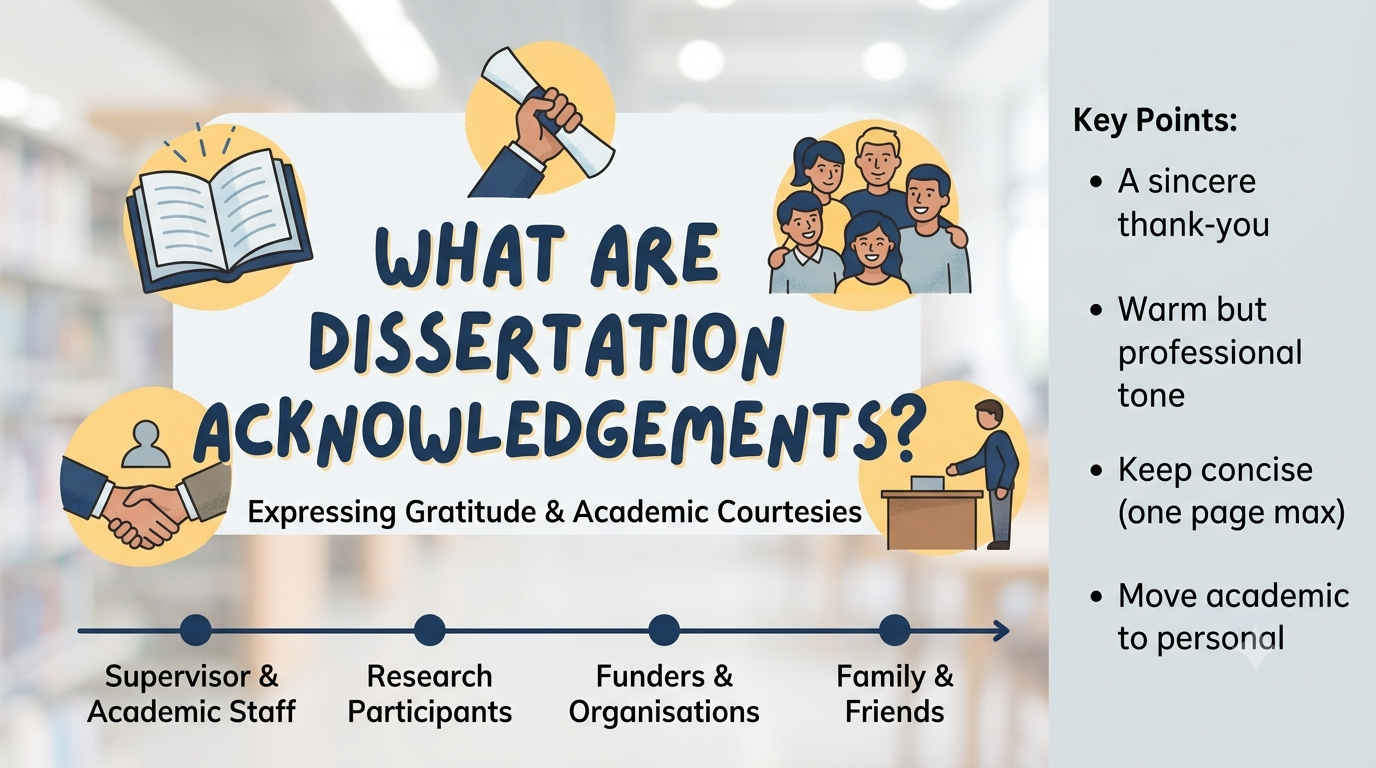
How to Write Dissertation Acknowledgements
September 23, 2026
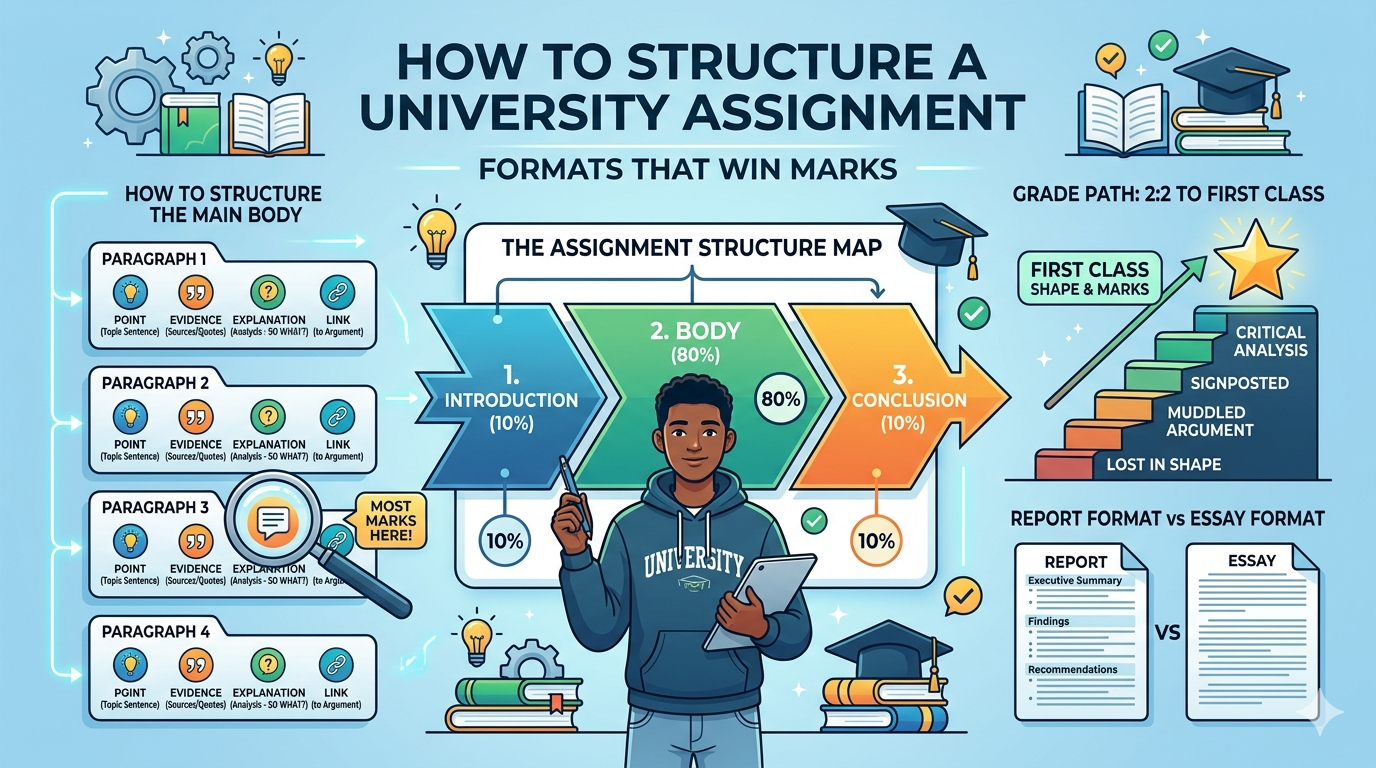
How to Structure a University Assignment: Formats That Win Marks
June 23, 2026

120+ Business Dissertation Topics and Ideas for 2026
March 2, 2026
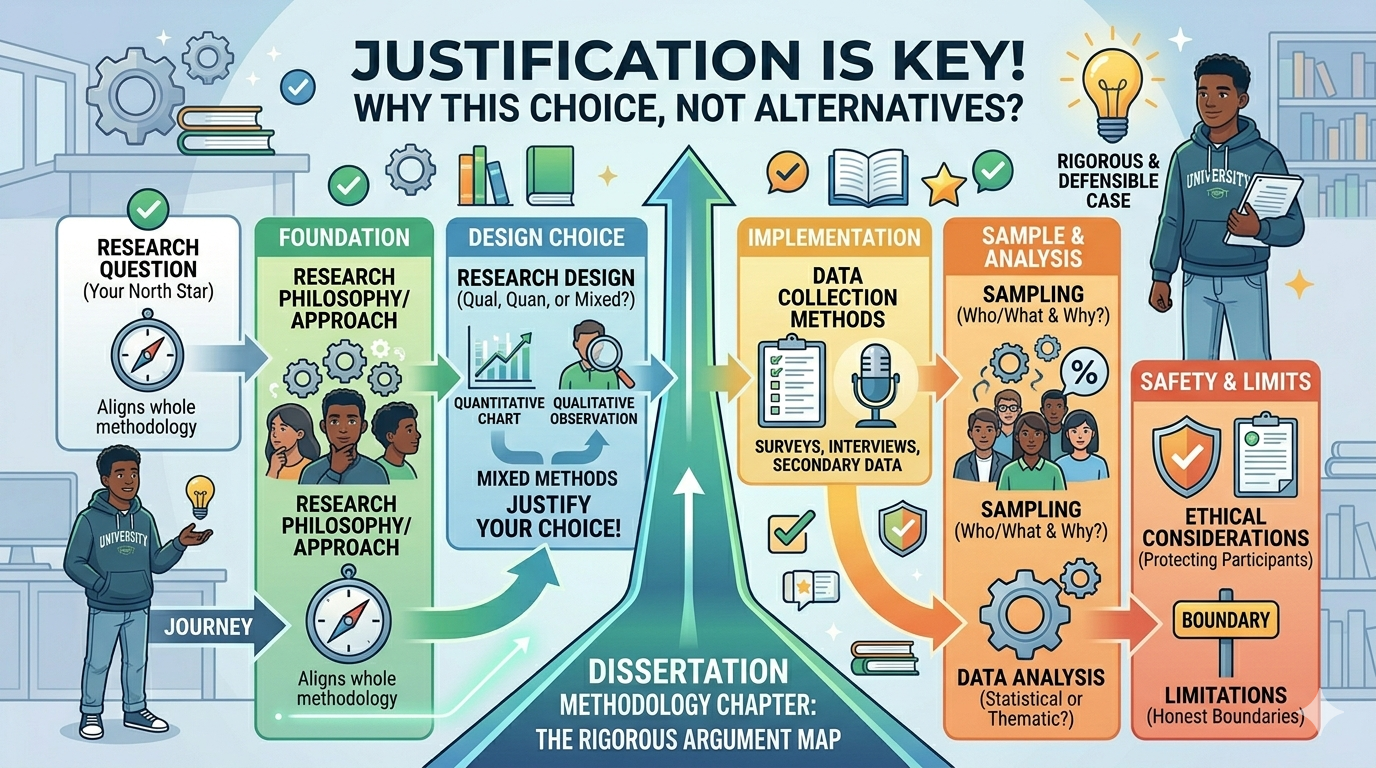
How Do You Write a Dissertation Methodology Chapter?
June 25, 2026
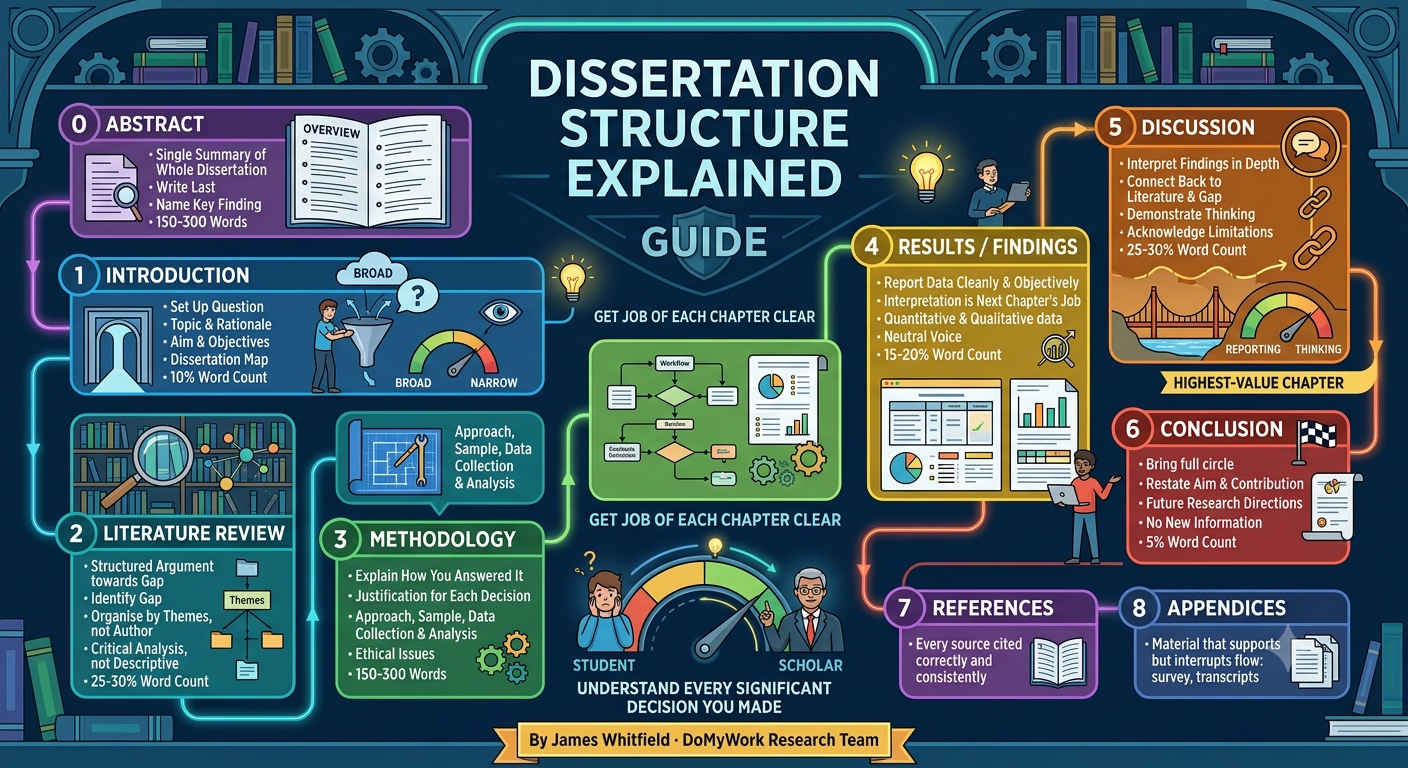
Dissertation Structure Explained Chapter by Chapter
July 11, 2026
Want more tips & great deals? Get them sent to your inbox
Please enter a valid E-mail
By clicking "Subscribe" you agree to be contacted via e-mail. You can always unsubscribe from the newsletter


