
Ready by 1:28am Oct 24, 2026
Referencing Styles Explained: APA, MLA, Harvard, Chicago and More
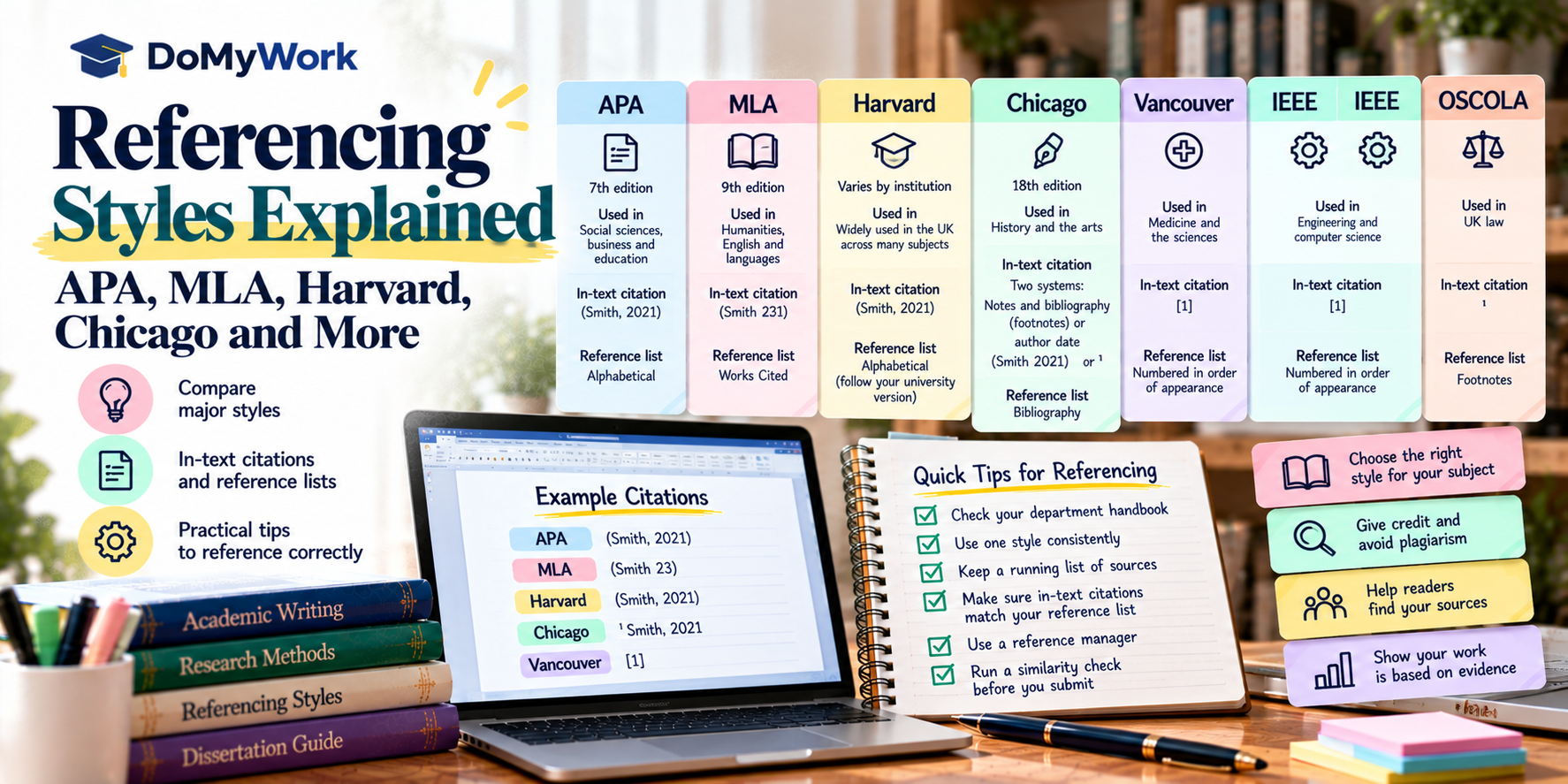
A referencing style is a set of rules for citing sources in your text and listing them at the end. The main ones are APA, MLA, Harvard, Chicago and Vancouver. Which you use depends on your subject and your department, so check your handbook first.
Why referencing matters
- It gives credit and keeps you clear of plagiarism.
- It lets a reader find your sources.
- It shows your work is grounded in evidence.
A missed citation can read as plagiarism even when it was an accident. A similarity report catches those gaps before you hand in, which is where Plag Check helps.
The main styles at a glance
- APA (7th edition): social sciences, business and education. In text it uses author and year, like (Smith, 2021). The list at the end is alphabetical.
- MLA (9th edition): humanities, English and languages. In text it uses author and page, like (Smith 23). The list is called Works Cited.
- Harvard: very common in the UK across many subjects. Author and year in text. There is no single authority, so follow your institution’s version.
- Chicago (18th edition): history and the arts. It has two systems: notes and bibliography, which uses footnotes, or author date.
- Vancouver: medicine and the sciences. It numbers citations in the order they appear, like [1], and lists them by number.
Two more you may meet: IEEE, numbered and used in engineering, and OSCOLA, used for UK law.
In-text citation vs reference list
Every style has two parts. The in-text citation is the short marker in your sentence that points to a source. The reference list or bibliography at the end gives the full details so the reader can find it. The two must match: every in-text citation needs an entry in the list, and every entry needs at least one mention in the text.
Reference without the stress
- Pick your style before you start writing.
- Keep a running list of sources as you research.
- Use the same style and edition throughout.
- A reference manager can build the list for you.
Then confirm nothing slipped through with a similarity report.
Before you submit, run your draft through Plag Check for a Turnitin similarity and AI report in about 15 minutes. Your draft is not stored in Turnitin’s database, so it will not come back as a match when you hand in.
Before you submit
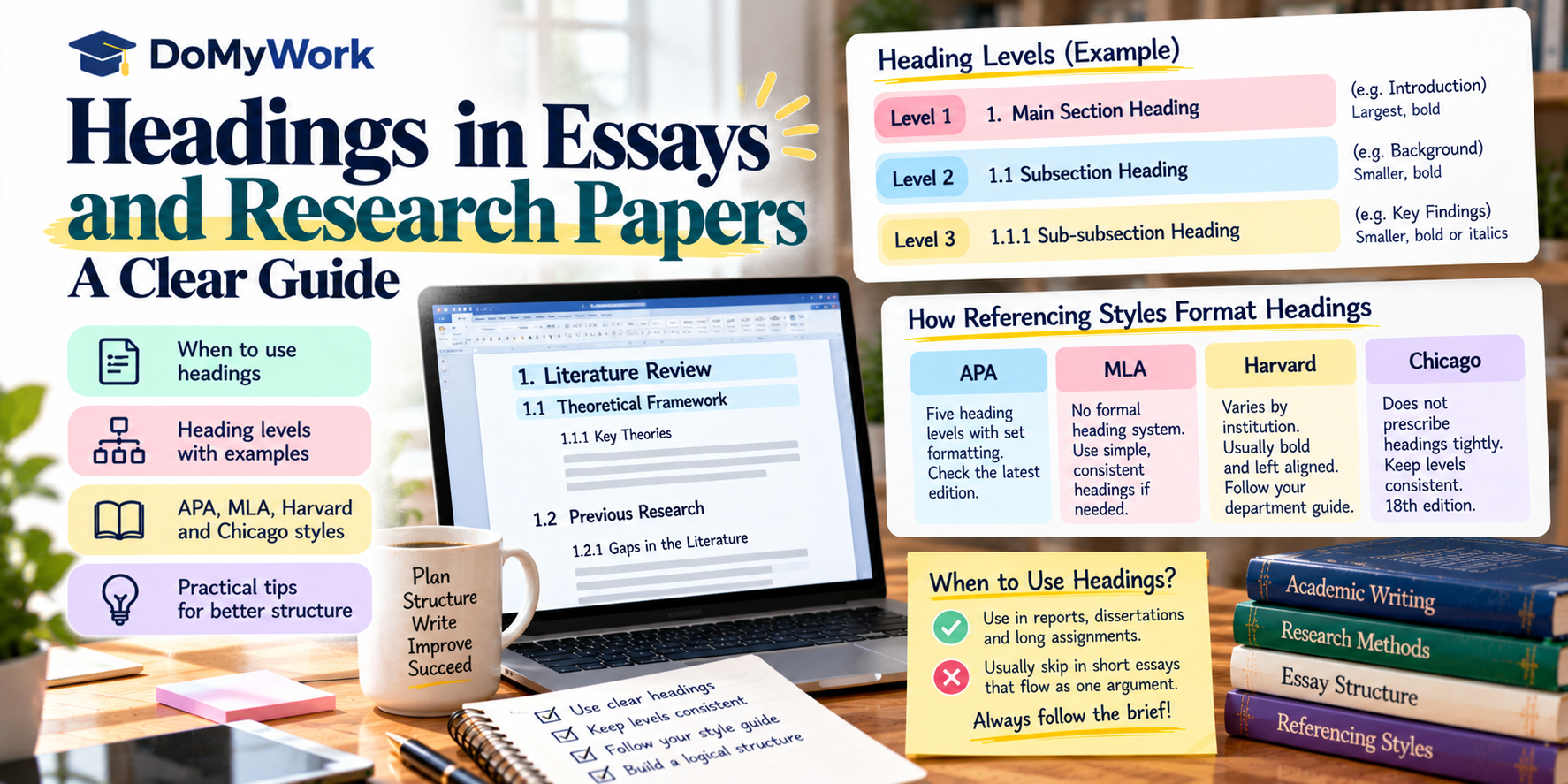
Check that your headings match the style, and that the overall shape fits how to structure an assignment or how to structure a dissertation.
Not sure where your draft stands? Upload it with your brief and rubric to Grade Predictor and see your likely grade before you submit. The first two predictions are free and you do not need a card. Your uploads are deleted after the prediction.

Frequently Ask Questions
What is the most common referencing style in the UK?
Harvard is very common, but it is not the only one. APA, MLA, Chicago and Vancouver all appear depending on the subject.
What is the difference between APA and Harvard?
Both use author and year. APA has one official manual with fixed rules. Harvard varies between institutions, so the details shift by university.
How do I know which referencing style to use?
Check your module handbook or ask your tutor. The required style is usually stated in the brief.
Does referencing stop plagiarism?
It helps a lot, because it credits every source. A similarity report confirms you did not miss anything.
Popular posts

110+ Hospitality and Cookery Assignment Topics for 2026
July 10, 2026
Education Dissertation Topics: 110+ Ideas with Research Aims (2026)
September 14, 2026
150 Controversial Essay Topics for Students (2026)
September 28, 2026
120+ Finance Dissertation and Assignment Topics for 2026
July 15, 2026
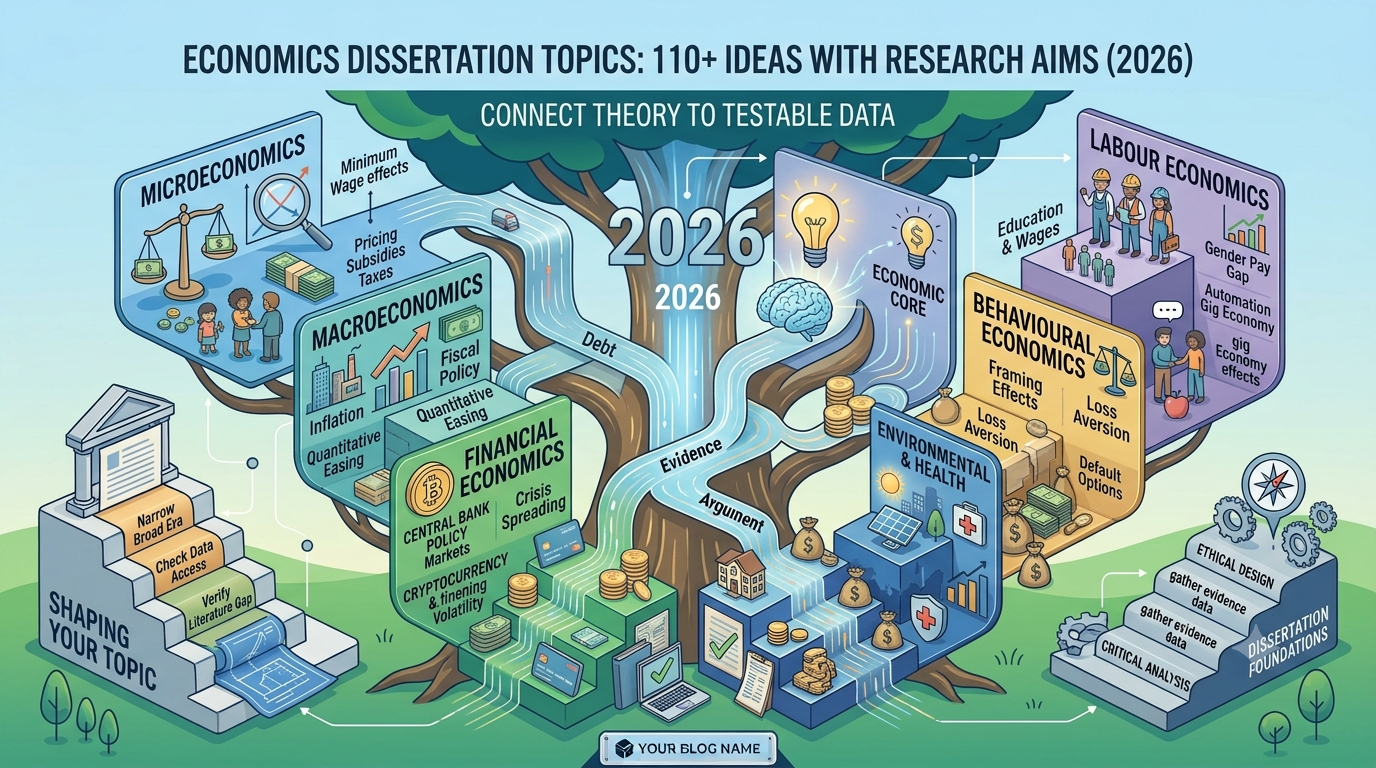
Economics Dissertation Topics: 110+ Ideas with Research Aims (2026)
September 15, 2026
Want more tips & great deals? Get them sent to your inbox
Please enter a valid E-mail
By clicking "Subscribe" you agree to be contacted via e-mail. You can always unsubscribe from the newsletter


