
Ready by 2:33am Sep 17, 2026
What Is a Good Turnitin Similarity Score? Percentages Explained (2026)
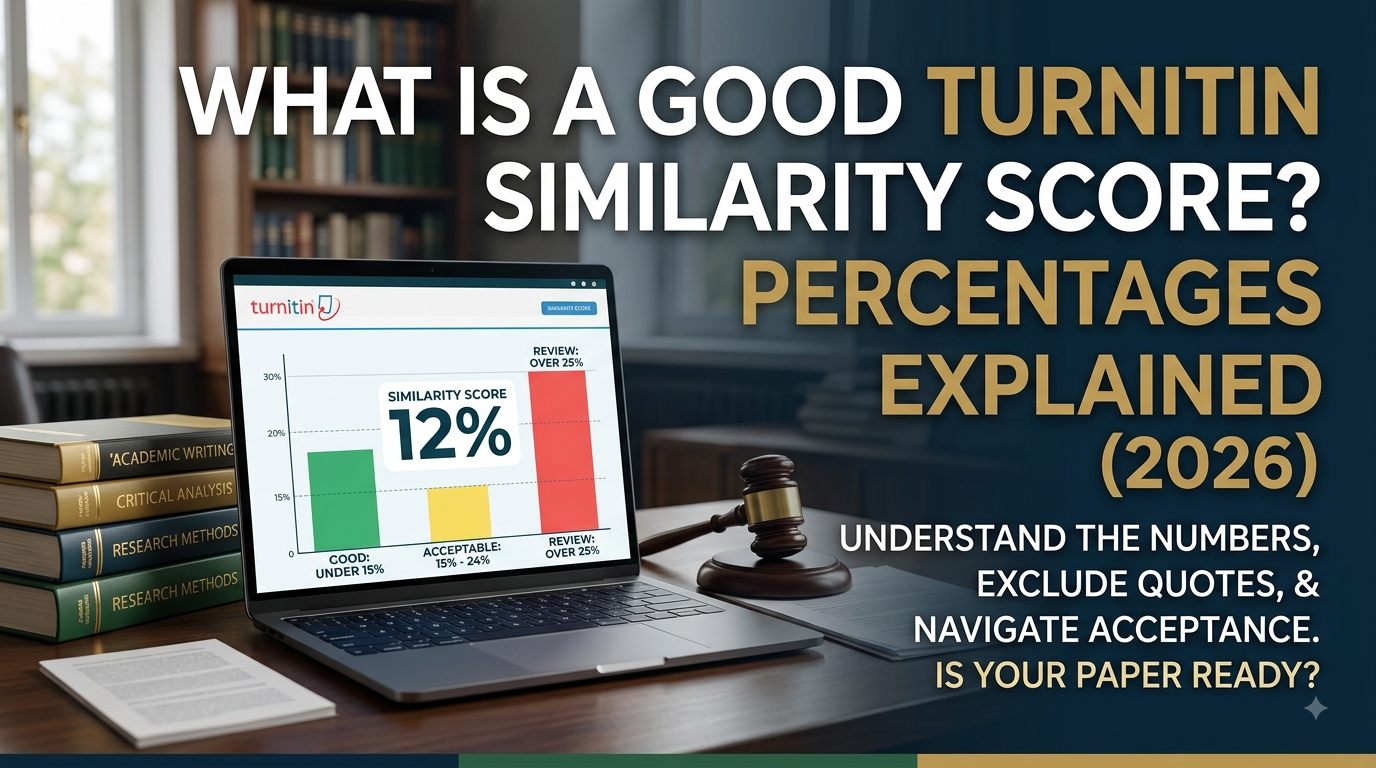
A good Turnitin similarity score is usually under 15%, and most universities treat anything below 20% as acceptable once quotes and references are excluded. There is no official pass mark, so the safe range depends on your institution’s policy. A high score is not proof of plagiarism; it shows matched text you need to check.
What is a good Turnitin similarity score?
For most universities, a similarity score under 15% is considered good, and scores below 20% are generally acceptable, provided the matches are properly quoted and referenced. The score is the percentage of your text that matches sources in Turnitin’s database. It measures matching, not misconduct, so a match to your own reference list or a quoted definition is normal and expected.
There is no universal number, because Turnitin does not set a threshold, your university does. Always check your module handbook for the figure your department uses. For how the report is laid out, see our Turnitin report colours guide, and for the separate AI writing indicator, our acceptable Turnitin AI score guide.
Turnitin similarity score percentages explained
The table below shows how similarity scores are usually read. Treat it as a guide, not a rule, since your university’s policy always comes first.
| Similarity score | What it usually means | Action |
| Under 15% | Generally good. Normal for referenced academic work. | Usually fine. Check matches are quoted and cited. |
| 15% to 24% | Acceptable at many universities, but worth reviewing. | Check where the matches fall and reference properly. |
| 25% to 40% | On the high side. Often signals over-reliance on sources. | Paraphrase more in your own words; reduce quotation. |
| Over 40% | High. Likely too much matched or unoriginal text. | Rewrite the flagged sections; review before submitting. |
Check your Turnitin score for UK universities, US Universities, Australian universities, European universities, and Canadian universities.
Is a 20% similarity score too high?
No, a 20% similarity score is not usually too high. Many universities accept up to around 20% as long as the matched text is quoted and referenced correctly. What matters is where the 20% comes from: 20% spread across many small citation matches is fine, while 20% from a single uncited source is a problem. Check the breakdown in your report before worrying about the number.
Is 10% similarity on Turnitin good?
Yes, 10% is a good similarity score at almost every university. It shows your work is mostly original, with a normal level of matching to quotes, references and common phrases. There is rarely any need to lower a score this low, and trying to force it toward zero can make your writing worse.
What does a high Turnitin score actually mean?
A high similarity score means a large share of your text matches other sources, but it is not automatic proof of plagiarism. It can come from heavy quoting, a long reference list, common subject phrases, or genuinely copied material. The number is a prompt to look closer, not a verdict. Open the report and see whether the matches are properly attributed before deciding anything.
If your score is genuinely too high, the fix is to paraphrase in your own words and quote less, not to use tricks. Our guide on how to lower your Turnitin score the right way explains the legitimate methods, and paraphrasing versus plagiarism shows how to reword safely.
Does a good score change by subject or assignment type?
Yes. A literature review or a legal essay that quotes statutes will naturally match more than a reflective piece, so a slightly higher score can still be acceptable. Dissertations often show higher matches because of long reference lists and methodology conventions. Judge your score against similar work in your subject, and against your department’s policy, rather than a single fixed number.
How do you interpret the similarity report?
Do not stop at the overall percentage. Open the report and read the matches.
- Check the colour bands and the source list to see what your text matched.
- Confirm quoted and referenced matches are correctly attributed, these are usually fine.
- Look for any single large match to one uncited source, which is the real warning sign.
- Use the filters to exclude quotes and the bibliography if your university allows it.
Our Turnitin report colours guide explains what each highlight band means, and how to check your Turnitin score before submitting covers running a pre-submission check.
How do you bring a high score down the right way?
Reduce a high score by improving originality, not by hiding matches. Paraphrase ideas fully in your own words, keep direct quotes short and necessary, and cite as you go so every source is attributed. Avoid word-swapping and spinning tools, which can make writing worse and are easy to spot. Our full guide on lowering your Turnitin score sets out the safe steps.
Frequently asked questions
What is a good Turnitin similarity score?
A similarity score under 15% is usually considered good, and under 20% is generally acceptable at most universities, provided quotes and references are correctly attributed. There is no official pass mark; your institution sets the threshold.
Is a 20% similarity score too high?
Not usually. Many universities accept up to around 20% when the matched text is properly quoted and cited. What matters is whether the matches are attributed, not the number alone.
Is 10% similarity on Turnitin good?
Yes. A 10% score is good at almost every university and shows your work is mostly original, with a normal level of matching to quotes and references.
Does a high Turnitin score mean plagiarism?
No. A high score shows matched text, which can come from quotes, references or common phrases. It is a prompt to check the report, not proof of plagiarism.
What similarity percentage is acceptable for a dissertation?
Many universities accept up to around 20% for a dissertation, and often a little higher, because long reference lists and methodology conventions increase matching. Always confirm the figure with your supervisor or handbook.
Popular posts

Best Student Side Hustles in the UK That Actually Pay in 2026
May 18, 2026

How Student Content Creators Can Get Paid Brand Deals in 2026
March 23, 2026
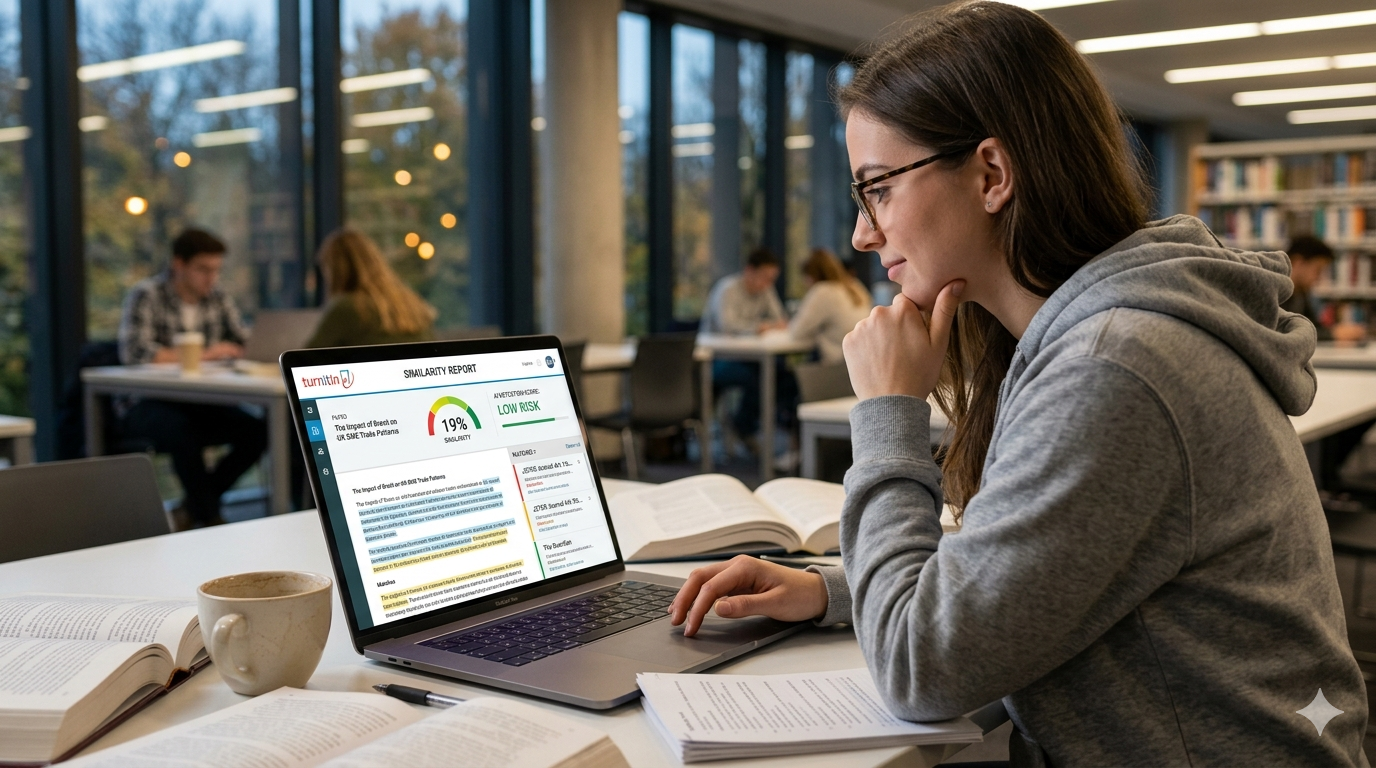
How to Check Your Turnitin Score Before Submitting
April 7, 2026
How to Write a First Class Essay at a UK University: A Complete Guide for Students
May 11, 2026
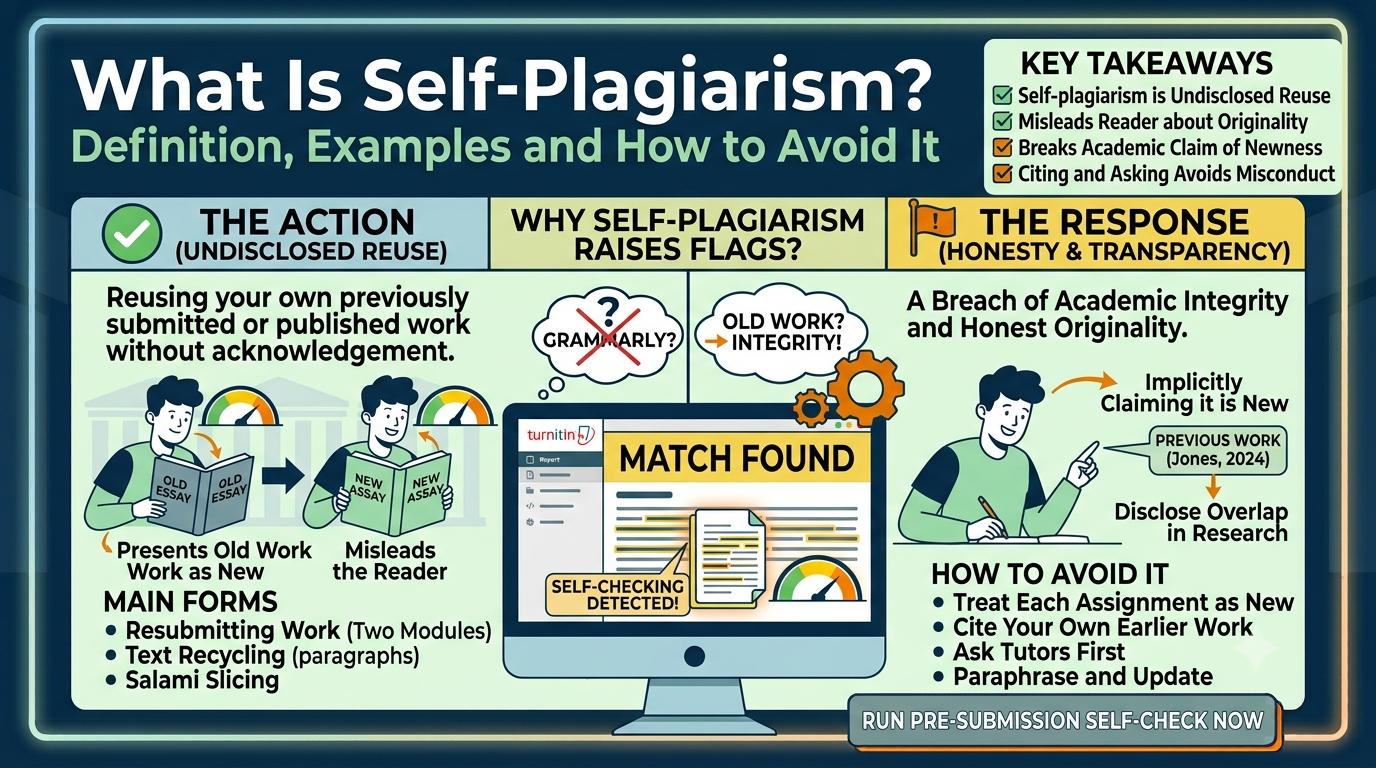
What Is Self-Plagiarism? Definition, Examples and How to Avoid It
July 23, 2026

Want more tips & great deals? Get them sent to your inbox
Please enter a valid E-mail
By clicking "Subscribe" you agree to be contacted via e-mail. You can always unsubscribe from the newsletter


