

Ready by 9:42am Aug 26, 2026
How to Write a SWOT Analysis for an Assignment (with Example, 2026)
A SWOT analysis examines an organisation’s internal Strengths and Weaknesses and its external Opportunities and Threats. To write one for an assignment, research the organisation, place each factor in the right quadrant with evidence, and then analyse what the combination means and what the organisation should do, rather than just listing points.
SWOT analysis is one of the most common tools students are asked to use in business, marketing and management assignments, and one of the easiest to do badly. A list of bullet points in four boxes scores poorly; a SWOT that is researched, evidenced and analysed scores well. This guide explains what SWOT is, how to build one, and, most importantly, how to turn it into analysis that earns marks, with a worked example.
What is a SWOT analysis?
A SWOT analysis is a strategic framework that summarises the key internal and external factors affecting an organisation. Strengths and Weaknesses are internal, things the organisation controls, such as its resources, brand or costs. Opportunities and Threats are external, things in the environment, such as market trends, competitors or regulation. Setting them side by side gives a quick, structured picture of an organisation’s position as a basis for strategy.
What goes in each SWOT quadrant?
The table below shows what belongs in each part and gives examples.
| Quadrant | What it covers | Examples |
| Strengths (internal) | Advantages the organisation has | Strong brand, loyal customers, low costs, skilled staff |
| Weaknesses (internal) | Internal limitations | Weak online presence, high debt, narrow product range |
| Opportunities (external) | Favourable external factors | Growing market, new technology, competitor exit |
| Threats (external) | External risks | New competitors, regulation, rising costs, changing tastes |
A common mistake is mixing internal and external factors, for example putting a market trend under Strengths. If the organisation controls it, it is internal (S or W); if it comes from the outside environment, it is external (O or T).
How do you write a SWOT analysis for an assignment?
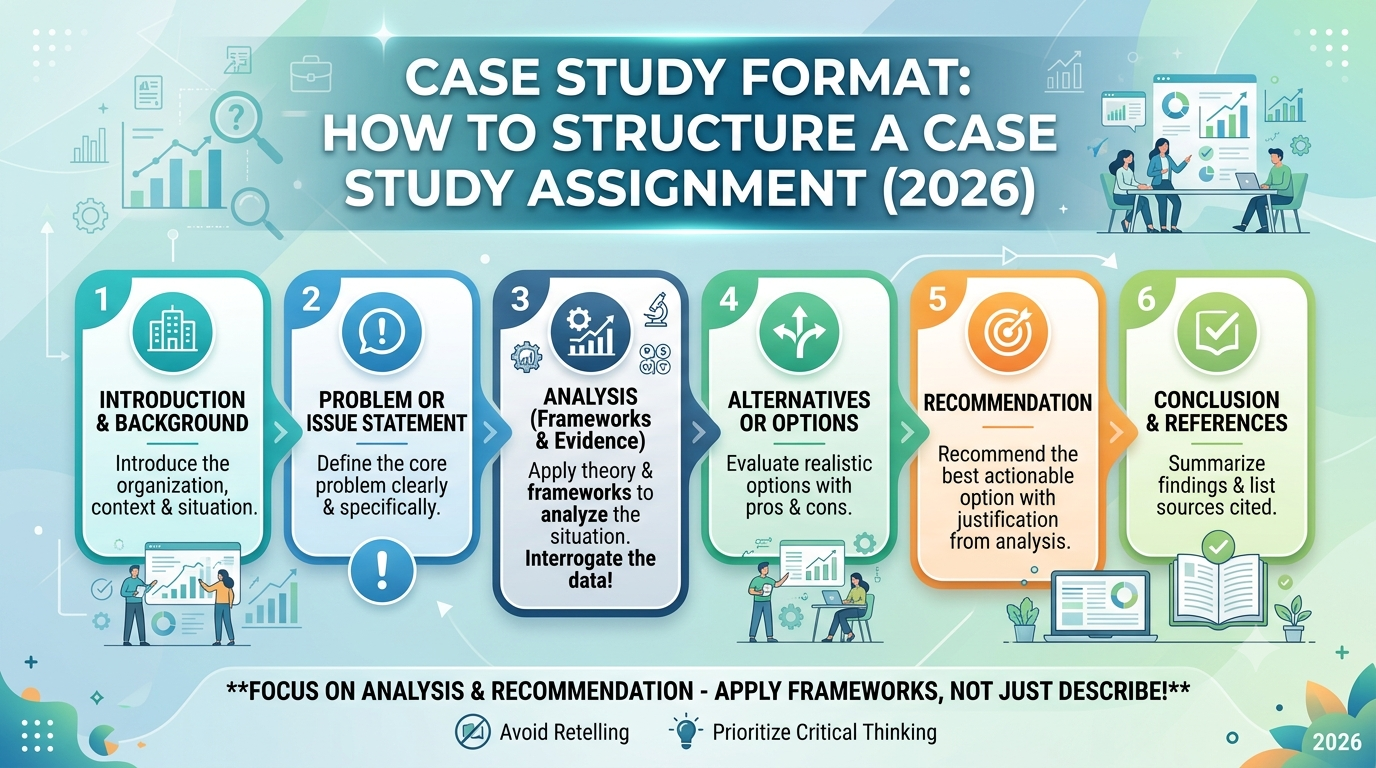
Follow these steps to move from a list to a proper analysis.
- Research the organisation and its market, so every point is evidence-based, not guessed.
- Place each factor in the correct quadrant, and keep internal and external separate.
- Support each point with a brief piece of evidence or a source, not just an assertion.
- Analyse, do not just list: explain why each factor matters and how significant it is.
- Draw conclusions: what does the overall picture suggest the organisation should do?
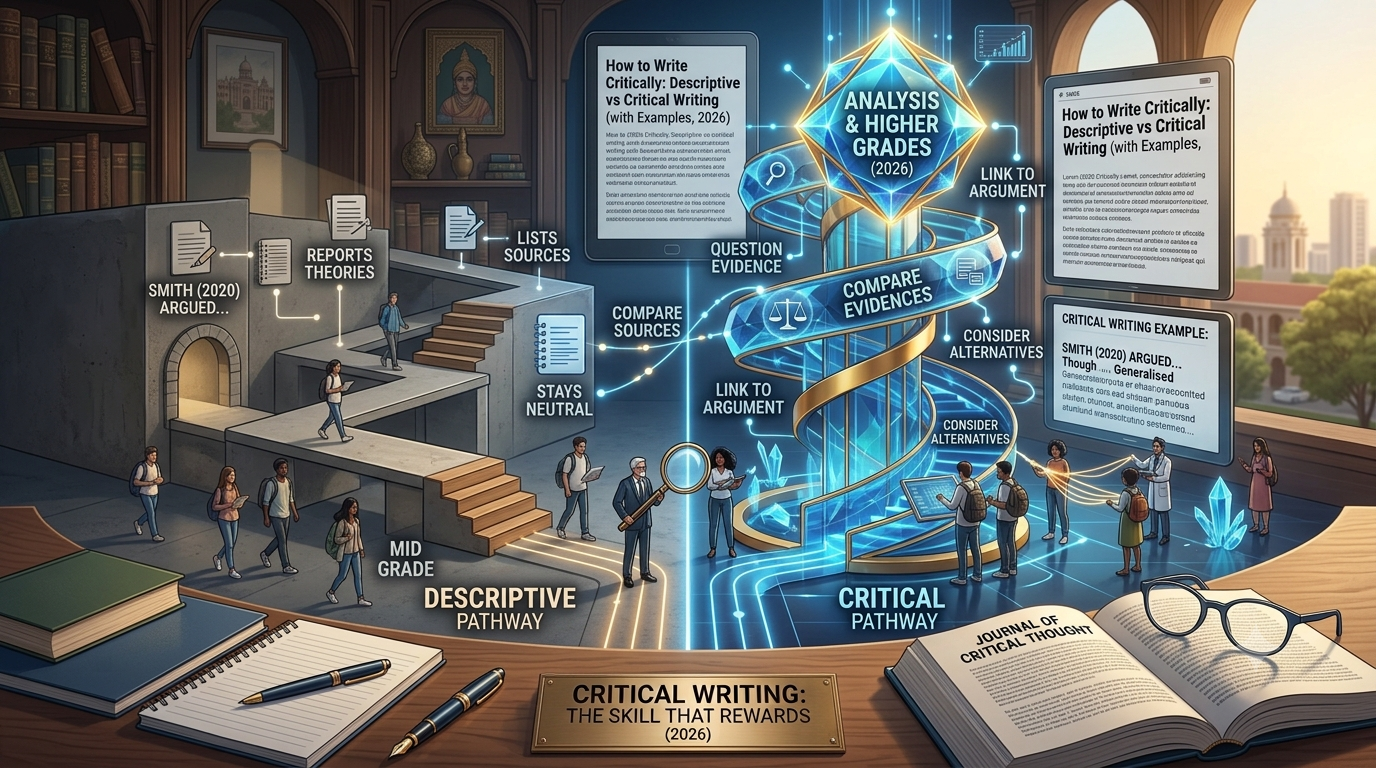
That fourth and fifth step are where the marks are. A SWOT that stops at four lists is descriptive; one that interprets the combination is analytical, which is exactly the distinction our how to write critically guide covers.
SWOT analysis example
Here is a short worked example for a fictional small coffee chain, showing evidenced points rather than bare bullets.
- Strength: a strong local brand with high customer loyalty, shown by repeat-visit data.
- Weakness: a limited online and delivery presence compared with national rivals.
- Opportunity: growing demand for speciality coffee and a competitor recently closing nearby.
- Threat: rising ingredient and energy costs squeezing already thin margins.
The analysis then connects these: the brand strength and the competitor’s exit together point to expansion, but the weak delivery presence and rising costs mean the safest move is to invest in online ordering before opening new sites. That linking sentence is the analytical payoff a marker looks for.
How do you turn SWOT into strategy?
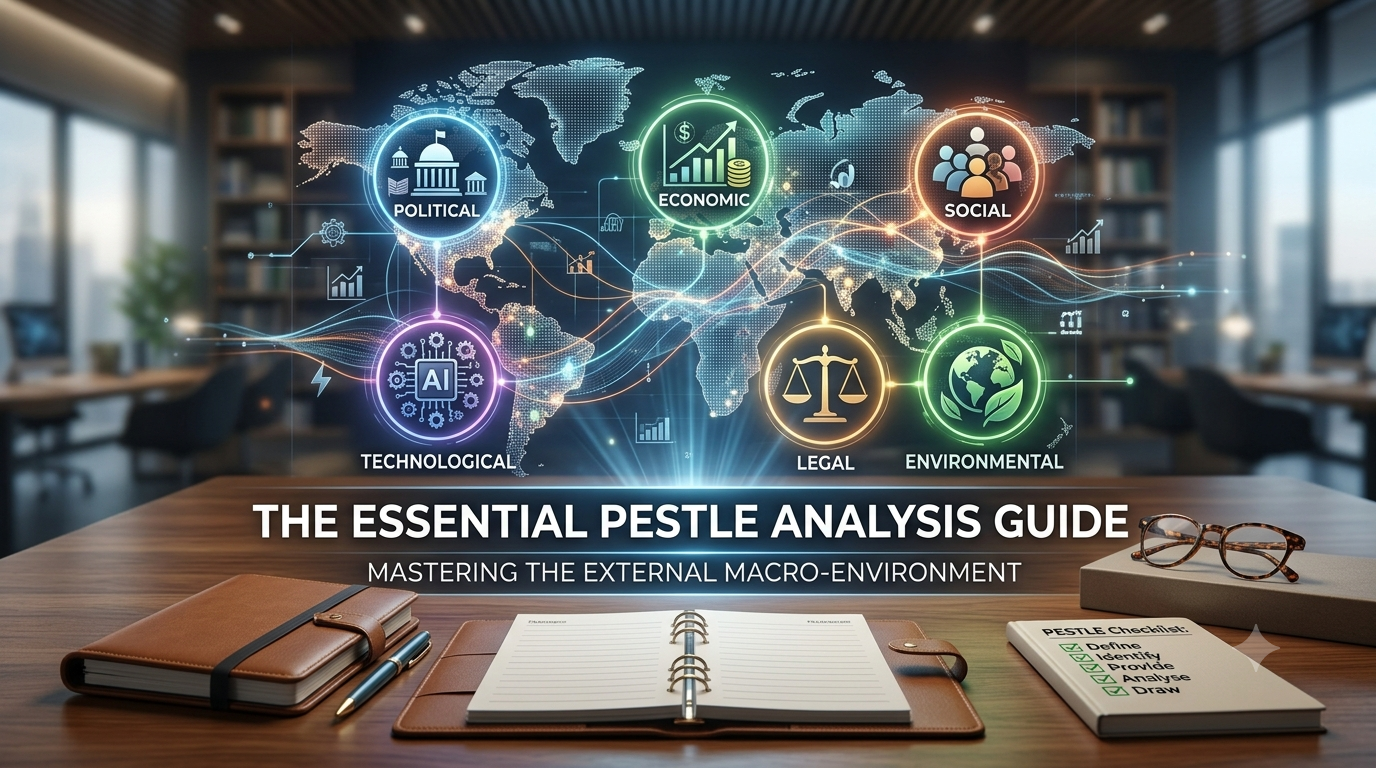
Strong assignments go one step further and cross the quadrants to generate strategy, sometimes called a TOWS analysis. Match strengths to opportunities to find growth moves, use strengths to defend against threats, and address weaknesses that expose the organisation to threats. This shows you can use SWOT as a decision tool, not just a description. Pairing it with another framework, such as a PESTLE analysis of the wider environment, makes the assignment stronger still.
Common SWOT mistakes to avoid
- Listing points with no evidence or sources.
- Confusing internal strengths and weaknesses with external opportunities and threats.
- Writing four lists and stopping, with no analysis or conclusion.
- Being vague, such as ‘good marketing’, instead of specific, evidenced points.
SWOT sits at the heart of many business tasks, so getting it right lifts your whole assignment. For structure, see our how to structure an assignment guide. If you would like expert support, our MBA assignment help guide and our assignment writing help and MBA assignment writing services can help.
Frequently asked questions
What is a SWOT analysis?
A SWOT analysis examines an organisation’s internal Strengths and Weaknesses and its external Opportunities and Threats, giving a structured picture of its position as a basis for strategy.
What are the four parts of SWOT?
Strengths and Weaknesses, which are internal to the organisation, and Opportunities and Threats, which come from the external environment.
How do you write a SWOT analysis in an assignment?
Research the organisation, place each evidenced factor in the correct quadrant, analyse why each matters, and draw conclusions about what the organisation should do, rather than only listing points.
What is the difference between SWOT and PESTLE?
SWOT covers internal and external factors for one organisation, while PESTLE analyses only the external macro-environment (political, economic, social, technological, legal and environmental factors). They are often used together.


Want more tips & great deals? Get them sent to your inbox
Please enter a valid E-mail
By clicking "Subscribe" you agree to be contacted via e-mail. You can always unsubscribe from the newsletter